Hi Everybody!!
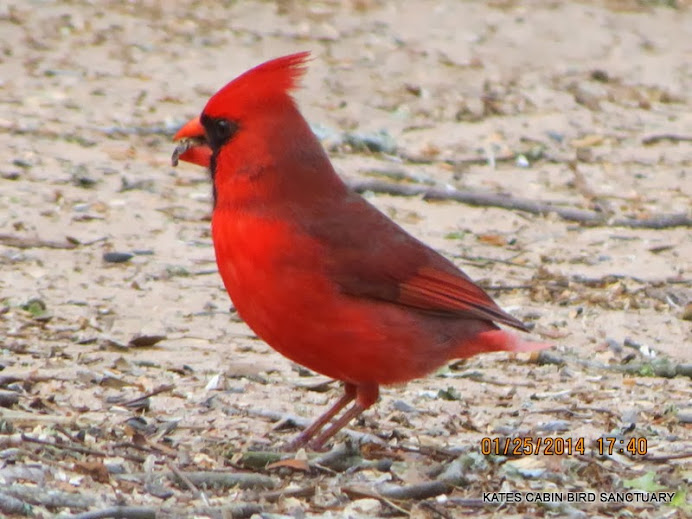
Tomorrow attention will be focused on a cloudy issue for the 2nd Annual Global March against Chemtrails and Geoengineering of the Sky. I would like to take this opportunity to encourage everyone to learn more about the atmosphere and what is really going on. I have been studying events in the sky for a year now and have come to the decision that the actions in the sky are necessary. One of the attempts is to make it rain. We need the rain to eliminate the drought conditions and regrow the grasses and trees. My Turkey Buzzards fly in the clouds everyday and are unharmed by the clouds. There are not less buzzards or dead birds, there are more birds. There is more rain this past fall than the past summer. I hope as more information is learned by the public, there will be less fear. I have included info from Wikipedia on clouds and also climate engineering to help us all begin to learn more. We need the clouds and the rain. We need to stop the droughts other countries can cause here. Your forecast is Partly Cloudy with a chance of clouds! Enjoy the spring-like skies in the photostudies!
Hi Everybody!!
Tomorrow attention will be focused on a cloudy issue for the 2nd Annual Global March against Chemtrails and Geoengineering of the Sky. I would like to take this opportunity to encourage everyone to learn more about the atmosphere and what is really going on. I have been studying events in the sky for a year now and have come to the decision that the actions in the sky are necessary. One of the attempts is to make it rain. We need the rain to eliminate the drought conditions and regrow the grasses and trees. My Turkey Buzzards fly in the clouds everyday and are unharmed by the clouds. There are not less buzzards or dead birds, there are more birds. There is more rain this past fall than the past summer. I hope as more information is learned by the public, there will be less fear. I have included info from Wikipedia on clouds and also climate engineering to help us all begin to learn more. We need the clouds and the rain. We need to stop the droughts other countries can cause here. Your forecast is Partly Cloudy with a chance of clouds! Enjoy the spring-like skies in the photostudies!
 https://en.wikipedia.org/wiki/Cloud
Cloud
From Wikipedia, the free encyclopedia
Terrestrial cloud formation is the result of air in Earth's atmosphere becoming saturated due to either or both of two processes; cooling of the air and adding water vapor. With sufficient saturation, precipitation will fall to the surface; an exception is virga, which evaporates before reaching the surface.
Clouds in the troposphere, the atmospheric layer closest to Earth's surface, have Latinnames due to the universal adaptation of Luke Howard's nomenclature. It was introduced in December 1802 and became the basis of a modern international system that classifies these tropospheric aerosols into several physical forms or categories, then cross-classifies them into families of low, middle andhigh according to cloud-base altitude range above Earth's surface. Clouds with significant vertical extent are often considered a separate family. One physical form shows free-convective upward growth into low or vertical heaps of cumulus. Other forms appear as non-convective layered sheets like low stratus, and as limited-convective rolls or ripples as with stratocumulus. Both of these layered forms have middle- and high-family variants identified respectively by the prefixes alto- and cirro-. Thin fibrous wisps of cirrus are a physical form found only at high altitudes. In the case of clouds with vertical extent, prefixes are used whenever necessary to express variations or complexities in their physical structures. These include cumulo- for complex highly convective vertical nimbus storm clouds, and nimbo- for thick stratiform layers with sufficient vertical depth to produce moderate to heavy precipitation. This process of cross-classification produces ten basic genus-types or genera, most of which can be subdivided into species and varieties. Synopticsurface weather observations use code numbers to record and report any type of tropospheric cloud visible at scheduled observation times based on its height and physical appearance.
While a majority of clouds form in Earth's troposphere, there are occasions when they can be observed at much higher altitudes in the stratosphere and mesosphere. Clouds that form above the troposphere have common names for their main types, but are sub-classified alpha-numerically rather than with the elaborate system of Latin names given to cloud types in the troposphere. These three main atmospheric layers that can produce clouds, along with the lowest part of the cloudless thermosphere, are collectively known as the homosphere. Above this lies the heterosphere (which includes the rest of the thermosphere and the exosphere) that marks the transition to outer space. Clouds have been observed on other planets and moons within the Solar System, but, due to their different temperature characteristics, they are composed of other substances such as methane, ammonia, and sulfuric acid.
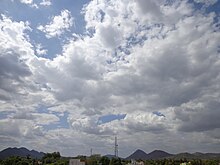
Stratocumulus stratiformis cumulogenitus
Tropospheric class[edit]
Formation: how the air becomes saturated[edit]
Cooling air to its dew point[edit]
Cloud evolution in under a minute.
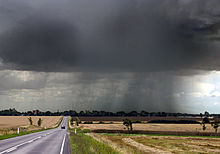
Late-summer rainstorm in Denmark. Nearly black color of base indicates main cloud in foreground probably cumulonimbus.
Adiabatic cooling[edit]
All weather-related clouds form in the troposphere, the lowest layer of Earth's atmosphere. This generally happens when one or more lifting agents causes air containing invisible water vapor to rise and cool to its dew point, the temperature at which the air becomes saturated. The main mechanism behind this process is adiabatic cooling.[2] Atmospheric pressure decreases with altitude, so the rising air expands in a process that expends energy and causes the air to cool, which reduces its capacity to hold water vapor. If the air is cooled to its dew point and becomes saturated, it normally sheds vapor it can no longer retain which condenses into cloud.[3]
Lifted condensation level[edit]
The altitude at which this begins to happen is called the lifted condensation level, which roughly determines the height of the cloud base. Water vapor in saturated air is normally attracted to condensation nuclei such as salt particles that are small enough to be held aloft by normal circulation of the air. If the condensation process occurs below the freezing level in the troposphere, the nuclei help transform the vapor into very small water droplets. Clouds that form just above the freezing level are composed mostly of supercooled liquid droplets, while those that condense out at higher altitudes where the air is much colder generally take the form of ice crystals. An absence of sufficient condensation particles at and above the condensation level causes the rising air to become supersaturated and the formation of cloud tends to be inhibited.[3]
Frontal and cyclonic lift[edit]
There are three main agents of vertical lift. One comprises two closely related processes which work together. Frontal lift and cycloniclift occur when stable or slightly unstable air, which has been subjected to little or no surface heating, is forced aloft at weather frontsand around centers of low pressure.[3] Cloud droplets form when the air is lifted beyond the condensation level where water vapor condenses on so-called nuclei; (small particles) that grow to a size of typically 0.002 mm (.00008 in).[4] In a cloud the droplets collide to form larger droplets. These larger droplets remain aloft as long as the drag force of the air dominates over the gravitational force for small particles. If the cloud droplets continue to grow past this size, they become too heavy to be held aloft as the gravitational force overcomes the atmospheric drag, and they fall from the cloud as rain.[5] When this process takes place just above the freezing level, the vapor tends to condense into supercooled water droplets, which with additional lifting and growth in size, can eventually turn intofreezing rain. At temperatures well below freezing, the vapor desublimates into ice crystals that average about 0.25 mm in length.[6]Continuing lift and desublimation will tend to increase the number of ice crystals which may combine until they are too heavy to be supported by the vertical air currents and fall out as snow.
Convective lift[edit]
Another agent is the buoyant convective upward motion caused by significant daytime solar heating at surface level, or by relatively high absolute humidity.[3] Air warmed in this way becomes increasingly unstable. This causes it to rise and cool until temperature equilibrium is achieved with the surrounding air aloft. If air near the surface becomes extremely warm and unstable, its upward motion can become quite explosive resulting in towering clouds that can break through the tropopause or cause severe weather. Strongconvection upcurrents may allow the droplets to grow to nearly .08 mm (.003 in) before precipitating as heavy rain from an active thundercloud. More occasionally, very warm unstable air is present around fronts and low-pressure centers. As with non-frontal convective lift, increasing instability promotes upward vertical cloud growth and raises the potential for severe weather.
Orographic lift[edit]
A third source of lift is wind circulation forcing air over a physical barrier such as a mountain (orographic lift).[3] If the air is generally stable, nothing more than lenticular cap clouds will form. However, if the air becomes sufficiently moist and unstable, orographic showers or thunderstorms may appear.[7]
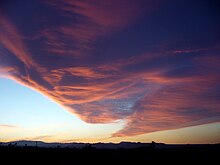
Windy evening twilight enhanced by the Sun's angle, can visually mimic a tornadoresulting from orographic lift
Non-adiabatic cooling[edit]
Along with adiabatic cooling that requires a lifting agent, there are three other main mechanisms for lowering the temperature of the air to its dew point, all of which occur near surface level and do not require any lifting of the air. Conductive, radiational, and evaporative cooling can cause condensation at surface level resulting in the formation offog.[8] Conductive cooling takes place when air from a relatively mild source area comes into contact with a colder surface, as when mild marine air moves across a colder land area. Radiational cooling occurs due to the emission of infrared radiation, either by the air or by the surface underneath.[9] This type of cooling is common during the night when the sky is clear. Evaporative cooling happens when moisture is added to the air through evaporation, which forces the air temperature to cool to its wet-bulb temperature, or sometimes to the point of saturation.[10]
Adding moisture to the air[edit]
There are five main ways water vapor can be added to the air. Increased vapor content can result from wind convergence over water or moist ground into areas of upward motion.[11] Precipitation or virga falling from above also enhances moisture content.[12] Daytime heating causes water to evaporate from the surface of oceans, water bodies or wet land.[13] Transpiration from plants is another typical source of water vapor.[14] Lastly, cool or dry air moving over warmer water will become more humid. As with daytime heating, the addition of moisture to the air increases its heat content and instability and helps set into motion those processes that lead to the formation of cloud or fog.[15]
Cohesion and dissolution[edit]
There are forces in the atmosphere such as wind shear and downdrafts that can impact the structural integrity of a cloud. However, as long as the air remains saturated, the natural force of cohesion that hold the molecules of a substance together acts to keep the cloud from breaking up.[16] Dissolution of the cloud can occur when the process of adiabatic cooling ceases after the passage of a weather disturbance or following the loss of daytime heating of the lower troposphere. Upward lift of the air is replaced by subsidence. This leads to at least some degree of adiabatic warming of the air which can result in the cloud droplets evaporating and turning back into invisible water vapor.[17]
Effects on climate[edit]
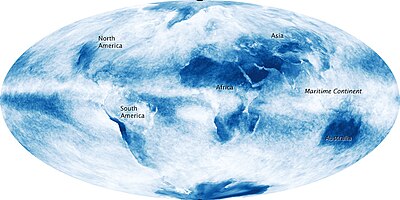
Global cloud cover, averaged over the month of October 2009. NASAcomposite satellite image; larger image available here.
The role of tropospheric clouds in regulating weather andclimate remains a leading source of uncertainty in projections of global warming.[81][82] This uncertainty arises because of the delicate balance of processes related to clouds, spanning scales from millimeters to planetary. Hence, interactions between the large-scale (synoptic meteorology) and clouds becomes difficult to represent in global models. The complexity and diversity of clouds, as outlined above, adds to the problem. On the one hand, white-colored cloud tops promote cooling of Earth's surface by reflecting short-wave radiation from the sun. Most of the sunlight that reaches the ground is absorbed, warming the surface, which emits radiation upward at longer, infrared, wavelengths. At these wavelengths, however, water in the clouds acts as an efficient absorber. The water reacts by radiating, also in the infrared, both upward and downward, and the downward long-wave radiation results in some warming at the surface. This is analogous to the greenhouse effect of greenhouse gases and water vapor.[83]
High tropospheric genus-types, cirrus, cirrocumulus, and cirrostratus, particularly show this duality with both short-wave albedocooling and long-wave greenhouse warming effects. On the whole though, ice-crystal clouds in the upper troposphere tend to favor netwarming.[84][85] However, the cooling effect is dominant with lower stratocumuliform and stratiform clouds made of very small water droplets that have an average diameter of about 0.002 mm (.00008 in).,[4] especially when they form in extensive sheets that block out more of the sun. These include middle-altitude layers of altocumulus and altostratus as well as low stratocumulus, and stratus. Small-droplet aerosols are not good at absorbing long-wave radiation reflected back from Earth, so there is a net cooling with almost no long-wave effect. This effect is particularly pronounced with low clouds that form over water.[84] Low and vertical heaps of cumulus,towering cumulus, and cumulonimbus are made of larger water droplets ranging in diameter from .005 to about 0.3mm. Nimbostratus cloud droplets can also be quite large, up to 0.3mm in diameter.[86] These larger droplets associated with vertically developed clouds are better able to trap the long-wave radiation thus migitating the cooling effect to some degree. However, these large often precipitating clouds are variable or unpredictable in their overall effect because of variations in their concentration, distribution, and vertical extent. Measurements taken by NASA indicate that on the whole, the effects of low and middle clouds that tend to promote cooling are outweighing the warming effects of high clouds and the variable outcomes associated with vertically developed aerosols.[84]
As difficult as it is to evaluate the effects of current cloud cover characteristics on climate change, it is even more problematic to predict the outcome of this change with respect to future cloud patterns and events. As a consequence, much research has focused on the response of low and vertical clouds to a changing climate. Leading global models can produce quite different results, however, with some showing increasing low-level clouds and others showing decreases.[87][88]
Polar stratospheric and mesospheric clouds are not common or widespread enough to have a significant effect on climate.[75]However an increasing frequency of occurrence of noctilucent clouds since the 19th century may be the result of climate change.
Global brightening[edit]
New research indicates a global brightening trend.[89] The details are not fully understood, but much of the global dimming (and subsequent reversal) is thought to be a consequence of changes in aerosol loading in the atmosphere, especially sulfur-based aerosol associated with biomass burning and urban pollution.[90] Changes in aerosol burden can have indirect effects on clouds by changing the droplet size distribution[91] or the lifetime and precipitation characteristics of clouds.[92]
Link to photostudy in G+ Albums:
https://plus.google.com/u/0/photos/117645114459863049265/albums/5971359612326438161

Link to photostudy in G+ Albums:
https://plus.google.com/u/0/photos/117645114459863049265/albums/5971360942201497985


Link to photostudy in G+ Albums:
https://plus.google.com/u/0/photos/117645114459863049265/albums/5971362639672319457
 https://en.wikipedia.org/wiki/Climate_engineering
Climate engineering
From Wikipedia, the free encyclopedia
Geoengineering has been proposed as a potential third option for tackling global warming, alongside mitigation and adaptation.[4] Scientists do not typically suggest geoengineering the climate as an alternative to emissions control, but rather an accompanying strategy.[5]Reviews of geoengineering techniques for climate control have emphasised that they are not substitutes for emission controls and have identified potentially stronger and weaker schemes.[6][7][8]
The Intergovernmental Panel on Climate Change (IPCC) concluded in 2007 that geoengineering options for climate change "remained largely speculative and unproven".[9]The costs, benefits, and risks of many geoengineering approaches to climate change are not well understood.[10][11] However, in the 2013 Fifth Assessment Report (AR5), the IPCC concluded that "Modelling indicates that SRM methods, if realizable, have the potential to substantially offset a global temperature rise, but they would also modify the global water cycle, and would not reduce ocean acidification."[12][dead link]
There are no known large-scale climate engineering projects except one conducted outside the scientific mainstream by Russ George. Almost all research has consisted of computer modelling or laboratory tests, and attempts to move to real-world experimentation have proved controversial. Some limitedtree planting[13] and cool roof[14] projects are already underway. Ocean iron fertilization has been given small-scale research trials.[15]Field research into sulfur aerosols has also started.[16]
Voices of caution against viewing geoengineered interventions as a simple solution to climate change are largely due to the risks and partially unknown side-effects of the technologies in question. Given the vastly insufficient action on emissions reductions in climate policy to date some have argued though that the risks of such interventions are to be seen in the context of risks of dangerous climate change.[17] As a rule of thumb it would appear that the scale of risks and costs of each climate engineering option appear to be somewhat inverse: The lower the costs, the greater the risks.[17] Some have suggested that the concept of geoengineering the climate presents a moral hazard because it could reduce political and public pressure for emissions reduction.[18] Groups such asETC Group[19] and individuals such as Raymond Pierrehumbert have called for a moratorium on deployment and out-of-doors testing of geoengineering techniques for climate control.[20][21] In October 2011, a Bipartisan Policy Center panel issued a report urging immediate researching and testing in case "the climate system reaches a 'tipping point' and swift remedial action is required".[22] TheNational Academy of Sciences is running 21-month project which will study how humans might influence weather patterns, assess dangers and investigate possible national security implications of geoengineering attempts. The project will be funded by the CIA, theNational Oceanic and Atmospheric Administration, and NASA.[23]
Background[edit]
Solar radiation management[edit]
Solar radiation management (SRM)[2][37] projects seek to reduce sunlight absorbed (ultra-violet, near infra-red and visible). This would be achieved by deflecting sunlight away from the Earth, or by increasing the reflectivity (albedo) of the atmosphere or the Earth's surface. These methods do not reduce greenhouse gas concentrations in the atmosphere, and thus do not seek to address problems such as the ocean acidification caused by CO2. Solar radiation management projects often have the advantage of speedy deployment and effect. While greenhouse gas remediation offers a more comprehensive possible solution to climate change, it does not give instantaneous results; for that, solar radiation management is required.[dubious – discuss]
Carbon dioxide removal[edit]
Carbon dioxide removal projects seek to remove greenhouse gases from the atmosphere. Proposed methods include those that directly remove such gases from the atmosphere, as well as indirect methods that seek to use natural processes(e.g. tree planting). Many projects overlap with carbon capture and storage and carbon sequestration projects, and may not be considered to be geoengineering by all commentators. Techniques in this category include:
Effect on sunlight, sky and clouds[edit]
Managing solar radiation using aerosols or cloud cover would change the ratio between direct and indirect solar radiation. This may affect plant life[85] and solar energy.[86] There will be a significant effect on the appearance of the sky from aerosol projects, notably a hazing of blue skies and a change in the appearance of sunsets.[87] Aerosols may affect the formation of clouds, especially cirrus clouds.[88]
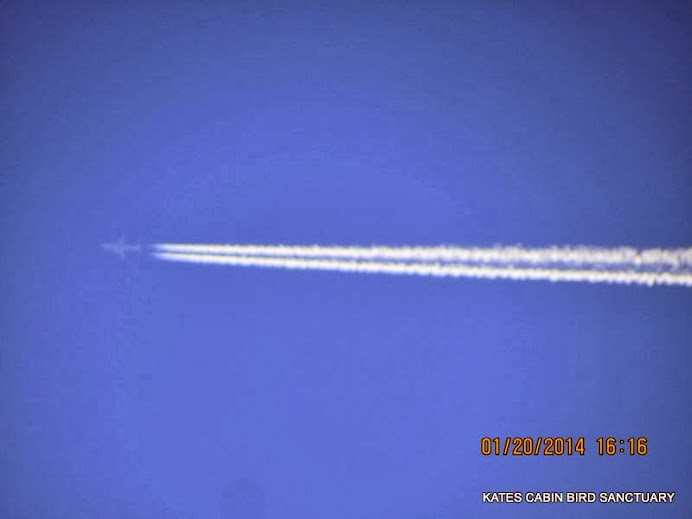 Other links with info about clouds:
http://www.aboutthesky.com/geo-engineering
http://globalskywatch.com/stories/my-chemtrail-story/chemtrail-information/geoengineering-artifacts.html#.UuKYtdLnZkg


Link to photostudy in G+ Albums:
https://plus.google.com/u/0/photos/117645114459863049265/albums/5971363643512956337

Link to photostudy in G+ Albums:
https://plus.google.com/u/0/photos/117645114459863049265/albums/5971365284190330657


link to photostudy in album:
https://plus.google.com/u/0/photos/117645114459863049265/albums/5971398805461550177

 ...this is brendasue signing off from Rainbow Creek. See You next time! (Plant some Trees!!)

O+O




.jpg)