

Hi Everybody!!
The snakes are out of hibernation and returning to active duty here in S. Texas. I found this big silver snake streaking back and forth in the lake. I have shared info below from Wikipedia about these non poisonous water snakes. I just found out from my friend +Dietrich Lombarde last week that there are no snakes in Ireland! I thought some of my friends might like to see a snake in the lake! For a bonus photostudy, my black daylily opened! Last but not least, some baby birds in nest. Enjoy!

https://en.wikipedia.org/wiki/Northern_water_snake
Northern water snake
From Wikipedia, the free encyclopedia
| Northern water snake | |
|---|---|
 | |
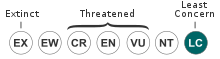
| Conservation status | |
| Scientific classification | |
| Kingdom: | Animalia |
| Phylum: | Chordata |
| Subphylum: | Vertebrata |
| Class: | Reptilia |
| Order: | Squamata |
| Suborder: | Serpentes |
| Family: | Colubridae |
| Subfamily: | Natricinae |
| Genus: | Nerodia |
| Species: | N. sipedon |
Geographic range[edit]
It is found throughout eastern and central North America, from southern Ontario and southern Quebec in the north, to Texas and Florida in the south.[2] It has been introduced in California where it is considered an invasive species likely to compete with native giant garter snakes Thamnopis gigas.[3]
Behavior[edit]

They are active during the day and at night. They are most often seen basking on rocks, stumps, or brush. During the day, they hunt among plants at the water's edge, looking for small fish, frogs, worms, leeches, crayfish,salamanders, small birds and mammals. At night, they concentrate on minnows and other small fish sleeping in shallow water. The Lake Erie water snake subspecies, Nerodia sipedon insularum, was once endangered, but now benefits from the introduction of theround goby, an invasive species, which now comprises up to 90% of its diet.
The Northern Water Snake is extremely common over most of its range and is frequently seen basking on stream banks, from which it dives into the water at the slightest disturbance. It is quick to flee from danger, but if cornered or captured, it usually will not hesitate to defend itself. Large specimens can inflict a painful bite.
Description[edit]
The northern water snake can grow up to 135 cm (4.4 ft) in total length.[4] They can be brown, gray, reddish, or brownish-black. They have dark crossbands on their necks and dark stripes and blotches on the rest of their bodies, often leading to misidentification as cottonmouths or copperheads by novices. They darken as they age. Some will become almost completely black. The belly of this snake also varies in color. It can be white, yellow, or gray. Usually it also has reddish or black crescents.
Reproduction[edit]
Northern water snakes mate from April through June. They are ovoviviparous (live-bearers), which means they do not layeggs like many other snakes. Instead, the mother carries the eggs inside her body and gives birth to free living young, each one 19–23 cm (7.5–9.1 in) long.[5] A female may have as many as thirty young at a time. They are born between August and October. Mothers do not care for their young; as soon as they are born, they are on their own.
Defense against predators[edit]
Northern water snakes have many predators, including birds, raccoons, opossums, foxes, snapping turtles, and other snakes. They defend themselves vigorously when they are threatened. If they are picked up by an animal, or person, they will bite repeatedly, as well as release excrement and musk. Their saliva contains a mild anticoagulant, which can cause the bite to bleed more but poses little risk to humans.[citation needed]
Hibernation[edit]
Northern water snakes often share winter dens with copperheads and black rat snakes.[citation needed]

https://plus.google.com/u/0/photos/117645114459863049265/albums/6010636521264509121


https://en.wikipedia.org/wiki/Daylily
Daylily
From Wikipedia, the free encyclopedia
Daylily is the common name for plants of the genus Hemerocallis/ˌhɛmɨroʊˈkælɪs/.[1] Daylily cultivar flowers are highly diverse in colour and form, as a result of hybridization efforts of gardening enthusiasts and professional horticulturalists. Thousands of registered cultivars are appreciated and studied by local and international Hemerocallis societies.[2] Hemerocallis is now placed in familyXanthorrhoeaceae, subfamily Hemerocallidoideae, and formerly was part of Liliaceae(which includes true lilies).
| Daylily | |
|---|---|
 | |
| Hemerocallis 'Hush Little Baby' | |
Scientific classification | |
| Kingdom: | Plantae |
| Clade: | Angiosperms |
| Clade: | Monocots |
| Order: | Asparagales |
| Family: | Xanthorrhoeaceae |
| Subfamily: | Hemerocallidoideae |
| Genus: | Hemerocallis |
Description[edit]

Daylilies are perennial plants. The nameHemerocallis comes from the Greek wordsἡμέρα (hēmera) "day" and καλός (kalos) "beautiful". This name alludes to the flowers which typically last no more than 24 hours. The flowers of most species open in early morning and wither during the following night, possibly replaced by another one on the same scape (flower stalk) the next day. Some species are night-blooming. Daylilies are not commonly used as cut flowers for formal flower arranging, yet they make good cut flowers otherwise as new flowers continue to open on cut stems over several days.
Hemerocallis is native to Eurasia, including China, Korea, and Japan, and this genus is popular worldwide because of the showy flowers and hardiness of many kinds. There are over 60,000 registered cultivars. Hundreds of cultivars have fragrant flowers, and more scented cultivars are appearing more frequently in northern hybridization programs. Some cultivars rebloom later in the season, particularly if their capsules, in which seeds are developing, are removed.
Most kinds of daylilies occur as clumps, each of which has leaves, a crown, flowers, and roots. The long, linear lanceolateleaves are grouped into opposite fans with arching leaves. The crown is the small white portion between the leaves and the roots. Along the scape of some kinds of daylilies, small leafy "proliferations" form at nodes or in bracts. A proliferation forms roots when planted and is often an exact clone of its parent plant. Many kinds of daylilies have thickened roots in which they store food and water.
A normal, single daylily flower has three petals and three sepals, collectively called tepals, each with a midrib in either the same or a contrasting color. The centermost part of the flower, called the throat, usually is of a different color than the more distal areas of the tepals. Each flower usually has six stamens, each with a two-lobed anther. After successful pollination, a flower forms a capsule (often erroneously called a pod).
The Tawny or Fulvous Daylily is invasive in some parts of the United States, such as in Wisconsin (Wisconsin Department of Natural Resources).[3] People sometimes plant the Fulvous Daylily and other stoloniferous daylilies, which have underground runners. These kinds can overrun one's garden and can take an appreciable amount of time and effort to confine or remove.

Hemerocallis fulva, illustration of 1885
Culinary use[edit]

The flowers of some species[which?] are edible and are used in Chinese cuisine. They are sold (fresh or dried) in Asian markets as gum jum orgolden needles (金针 in Chinese; pinyin: jīn zhēn) or yellow flower vegetables (黃花菜 in Chinese; pinyin: huáng huā cài). They are used in hot and sour soup, daylily soup (金針花湯), Buddha's delight, andmoo shu pork. The young green leaves and the rhizomes of some (but not all[citation needed]) species are also edible.
The Black Daylily of Rainbow Creek:

https://plus.google.com/u/0/photos/117645114459863049265/albums/6010647205050303185


https://plus.google.com/u/0/photos/117645114459863049265/albums/6011087344954875601


...this is brendasue signing off from Rainbow Creek. See You next time!


wrens

O+O


