Hi Everybody!!

Hi Everybody!!
Welcome to my Hometown!!
Showing posts with label Crape Myrtles. Show all posts

Sunday, August 4, 2013

THE DIRT DOG DAYS OF AUGUST (A WHAT THE DIRT IS AROUND HERE PHOTO BLOG)


Hi Everybody!!
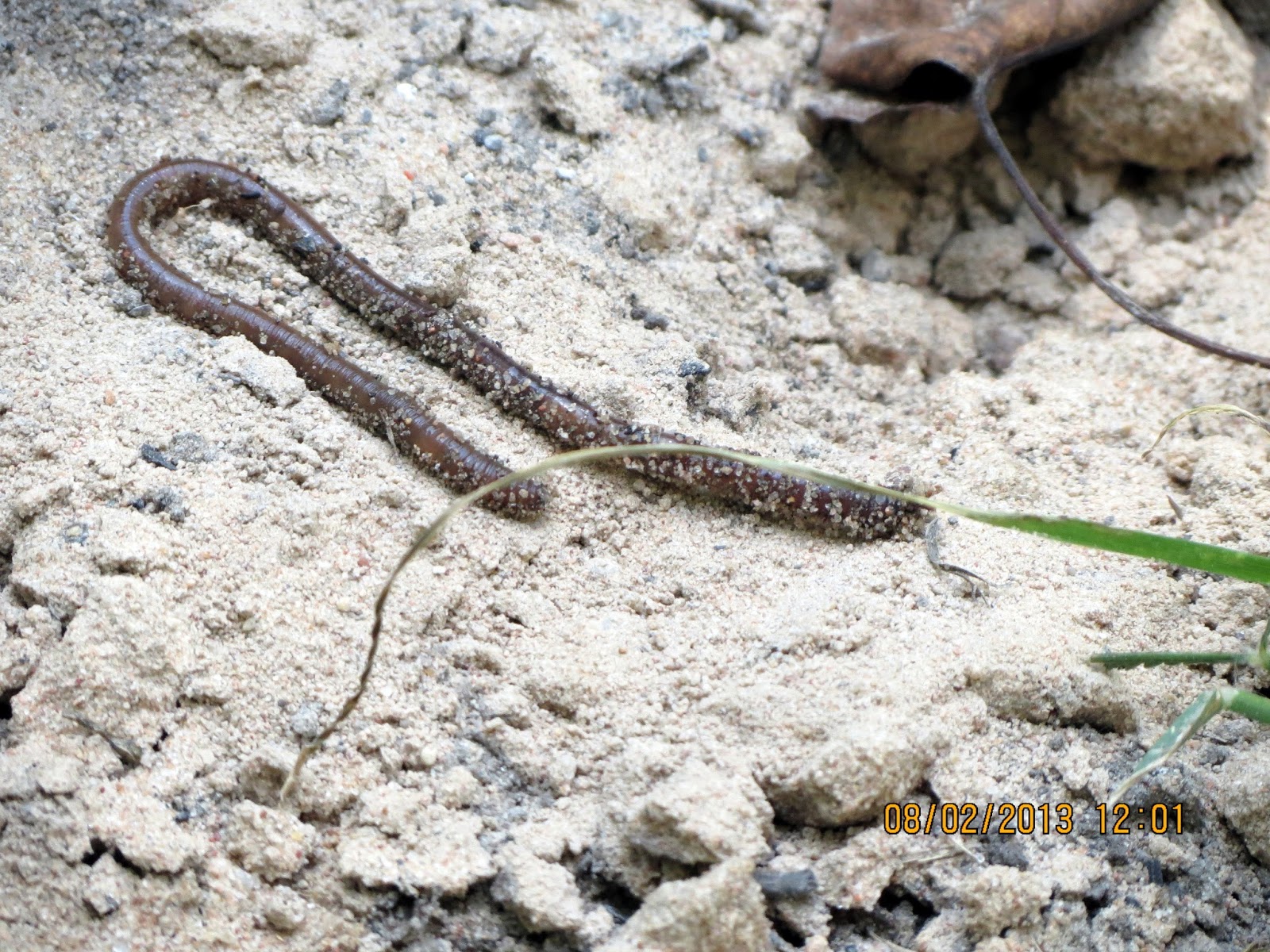
Definitely, the Dirt Dog Days of August have arrived as the temperatures stayed above 100 degrees all August. No Rain = Tons of Dust blowing in on the South Bay Breezes. 'Fat Sissy' (pictured above) is displaying rolling in the dusty dirt and sand. We are going down to dirt level tonight in the info about Earthworms! Your photostudy tonight includes a volunteer earthworm from the garden who came out in the heat at noon. (not typical). And of course, some flowers mixed in blooming today in the heat! Anyway, Enjoy!

If You are adding a new roof, consider reflective material like this galv-alum. It will help replace function of  the melted ice.


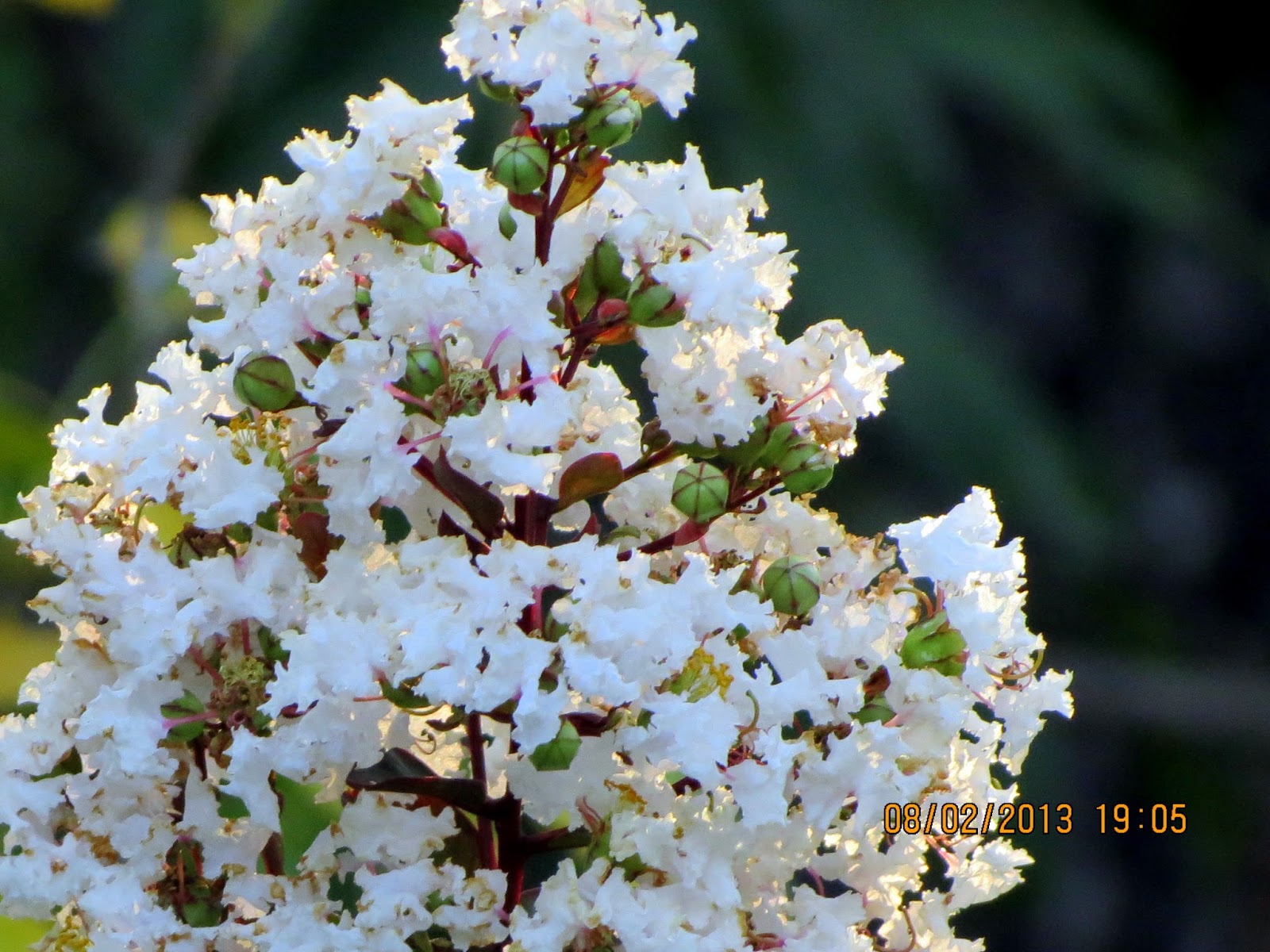
The Crape Myrtles: A Rainbow of Color in the Yard


The Coral Bean Tree blooming like firecrackers!


 One of the entries from the Google Index:

Erythrina herbacea - Wikipedia, the free encyclopedia

en.wikipedia.org/wiki/Erythrina_herbacea

Erythrina herbacea, commonly known as the Coral Bean, Cherokee Bean, Red Cardinal or Cardinal Spear, is a flowering shrub or small tree found throughout ...


Single Purple Althea, Red Throat


Single Purple Althea, Bumblebee Throat!


Double Pink Althea Tree:


This earthworm came out today just to meet You! Some people eat these. Some people fish with them. Here this guy is crawling across bank sand. Many earthworms live here in my great composted soil (from all the trees)
http://en.wikipedia.org/wiki/Earthworm

Earthworm

From Wikipedia, the free encyclopedia
Earthworm
Amynthas sp., a common Asian earthworm often cosmopolitan and introduced around the world
Scientific classification
Kingdom:Animalia
Phylum:Annelida
Class:Oligochaeta
Subclass:Haplotaxida
Order:Megadrilacea
Suborder:Lumbricina + Moniligastrida
NODC v. 8.0, 1996[1]
An earthworm is a tube-shaped, segmented animal commonly found living in soil, that feeds on live and dead organic matter. Its digestive system runs through the length of its body. It conducts respiration through its skin. An earthworm has a double transport system composed of coelomic fluid that moves within the fluid-filled coelom and a simple, closed blood circulatory system. It has a central and a peripheral nervous system. The central nervous system consists of two ganglia above the mouth, one on either side, connected to a nerve cord running back along its length to motor neurons and sensory cells in each segment. Large numbers of chemoreceptors are concentrated near its mouth. Circumferential and longitudinal muscles on the periphery of each segment enable the worm to move. Similar sets of muscles line the gut, and their actions move the digesting food toward the worm's anus.[2] Earthworms are hermaphrodites—each individual carries both male and female sex organs. As an invertebrate, it lacks a skeleton, but it maintains its structure with fluid-filled coelom chambers that function as a hydrostatic skeleton.
"Earthworm" is the common name for the largest members of Oligochaeta (which is either a class or a subclass depending on the author) in the phylum Annelida. In classical systems, they were placed in the order Opisthopora, on the basis of the male pores opening posterior to the female pores, though the internal male segments are anterior to the female. Theoretical cladistic studies have placed them, instead, in the suborder Lumbricina of the order Haplotaxida, but this may again soon change. Folk names for the earthworm include "dew-worm", "rainworm", "night crawler", and "angleworm" (due to its use as fishing bait).
Larger terrestrial earthworms are also called megadriles (or big worms), as opposed to the microdriles (or small worms) in the semiaquatic families TubificidaeLumbriculidae, and Enchytraeidae, among others. The megadriles are characterized by having a distinct clitellum (which is more extensive than that of microdriles) and a vascular system with true capillaries.

Locomotion and importance to soil


Close up of an earthworm in garden soil
Earthworms travel underground by the means of waves of muscular contractions which alternately shorten and lengthen the body. The shortened part is anchored to the surrounding soil by tiny claw-like bristles (setae) set along its segmented length. In all the body segments except the first, last and clitellum, there is a ring of S-shaped setae embedded in the epidermal pit of each segment (perichaetine). The whole burrowing process is aided by the secretion of lubricating mucus. Worms can make gurgling noises underground when disturbed as a result of the their movement through their lubricated tunnels. They also work as biological "pistons" forcing air through the tunnels as they move. Thus earthworm activity aerates and mixes the soil, and is conducive to mineralization of nutrients and uptake of them by vegetation. Certain species of earthworm come to the surface and graze on the higher concentrations of organic matter present there, mixing it with the mineral soil. Because a high level of organic matter mixing is associated with soil fertility, an abundance of earthworms is generally considered beneficial by the organic gardener. In fact, as long ago as 1881 Charles Darwin wrote: "It may be doubted whether there are many other animals which have played so important a part in the history of the world, as have these lowly organized creatures." [21]
Please see above link for more info!


The Vine below usually blooms in the Spring. Surprise! Cross Vine

 From the Google Index: (see your search box for more entries)
  1. Bignonia capreolata - Wikipedia, the free encyclopedia

    en.wikipedia.org/wiki/Bignonia_capreolata

    Bignonia capreolata is a vine commonly referred to as crossvine. The common name refers to the cross-shaped pattern revealed when the stem is cut; this ...


The Hotter it gets, the more the Oleanders bloom (zone 9)
 From the Google Index:

  • Nerium
  • Nerium oleander is an evergreen shrub or small tree in the dogbane family Apocynaceae, toxic in all its parts. It is the only species currently classified in the genus Nerium. Wikipedia
    Scientific nameNerium oleander


  • Checking on the Orange Citrus Tree:
     From the Google Index:  (use your Search Box for more entries on Citrus Trees)
    1. Citrus - Wikipedia, the free encyclopedia 

      en.wikipedia.org/wiki/Citrus

      Citrus trees hybridise very readily – depending on the pollen source, plants grown from a Persian Lime's seeds can produce fruit similar to grapefruit. Thus all ...


    ...this is brendasue signing off from Rainbow Creek.  See You next time! 
    Be Careful on the Roads and watch for Dusty Dirt Days!   Big Hugs!


    O+O

    Thursday, June 27, 2013

    STAYING COOL WITH THE OLD GOLD KING (WALK AROUND THE GROUNDS OF KATES CABIN BIRD SANCTUARY PHOTO BLOG)


    Hi Everybody!!
    Here is the golden "Little King".  I have asked him to show us what to do in this high heat:  Chill Out! The old King is a master at chilling out. Try to find somewhere cool and stay out of the heat of the day. I began my summer project on June 1, inside where it is cool. Happy to report I finished it today! I built and moved into my new apartment. I am showing the photos for the Fourth of July weekend. Here is a sneak peak of the new bedding, officially tested by the Little King! Your photostudy tonight is a walk around the grounds of Kates Cabin Bird Sanctuary to see the Hot Bloomers in the yard. Enjoy!
    The Guard Dog "On Duty" 24/7


    Good Morning Glory (Heavenly Blue)
    http://en.wikipedia.org/wiki/Morning_glory

    Morning glory

    From Wikipedia, the free encyclopedia
    Most morning glory flowers unravel into full bloom in the early morning. The flowers usually start to fade a few hours before the "petals" start showing visible curling. They prefer full solar exposure throughout the day, and mesic soils. Some morning glories, such as Ipomoea muricata, are night-blooming flowers.
    In some places, such as Australian bushland, some species of morning glories develop thick roots and tend to grow in dense thickets. They can quickly spread by way of long, creeping stems. By crowding out, blanketing and smothering other plants, morning glory has turned into a serious invasive weed problem.
    Ipomoea aquatica, known as water spinach, water morning glory, water convolvulus, ong-choy, kang-kung, or swamp cabbage, is popularly used as a green vegetable, especially in East and Southeast Asian cuisines. In the USA ipomoea aquatica is a Federal Noxious Weed, and can be illegal to grow, import, possess, or sell without permit. However, a market exists for the plant's powerful culinary potential. See: USDA weed factsheet. As of 2005, the state of Texas has acknowledged that water spinach is a highly prized vegetable in many cultures, and has allowed water spinach to be grown for personal consumption, in part because it is known to have been grown in Texas for more than 15 years and has not yet escaped cultivation.[2] Because it goes by so many names, it can easily be slipped through import inspections,[citation needed] and it is often available in Asian or specialty produce markets.


    The Cloud Cover of Morning Opens to reveal the Blue Sky


    Good morning Lucy!


    Good Morning to the Mourning Dove


    Waking Up with rosebuds (double pink knock outs)


    Down to the creek to see: 
    Crawfish Chimney

    http://www.americaswetlandresources.com/wildlife_ecology/plants_animals_ecology/animals/invertebrates/crawfish.html


    1. crawfish - America's WETLAND: Resource Center

      www.americaswetlandresources.com › ... › animals › invertebrates

      There are many species of crawfish in Louisiana, but only a few in America's ... They actually use their legs and mouth parts to dig up mud and make it into a little ...
    What are crawfish chimneys?  Crawfish chimneys are those "smokestack"-looking things that appear in field and our yards each spring.  Everywhere you see one (sometimes a crawfish will make two), there is a crawfish living in a burrow underneath.  Their tunnels may extend down into the earth 3 ft or more, sometimes being a single burrow going straight down, but more often being a main tunnel with a couple of side tunnels, each with a room at the end.  They are normally full of water.
    Sometimes one sees that the color and texture of the chimney mud is different at different levels of the chimney.  This is a sign that there are different characteristics of soil layers below the soil.  As the crawfish burrows down, it brings up soil from different layers and deposits the pellets of mud in the chimney.
    How do they make them?  No, they don't have little backhoes or dredges.  They actually use their legs and mouth parts to dig up mud and make it into a little ball called a pellet.  Each pellet is taken to the surface and put on the surface.  The next pellet is set beside the first.  This continues, much like a brick layer putting bricks on one layer, then making another layer, etc. until a building is totally bricked.  The crawfish makes the chimney out of many, many pellets of mud.  Take a close look the next time you see one and you will clearly see this neat system.
    Why do they build chimneys?  This is not completely known (no one has ever talked to a crawfish), but there are a couple of theories.
    The crawfish has to dig its burrow in order to be able to submerge in water beneath the water table.  As it does so, it has to do something with the mud.  If it takes the mud outside the burrow and crosses the ground to dispose of it, the crawfish will be vulnerable to predators.  To avoid that, they learned to build the chimney, thus never leaving the entrance of the burrow.  If you ever approach a chimney and the crawfish is visible, you will see how quickly it can fall/scurry back down the tunnel.
    Many animals are known to construct their burrows in such a fashion that they enhance the flow of air through the tunnels.  It is known that the water in crawfish tunnels may get low on oxygen.  It may be that the chimneys help air flow into the burrows so that oxygen can be absorbed in the water.


    Deep Shade here on the creek


    HOT BLOOMERS:
    Crape Myrtles

    Lagerstroemia

    From Wikipedia, the free encyclopedia
    http://en.wikipedia.org/wiki/Lagerstroemia

    Lagerstroemia /ˌlɡərˈstrmiə/,[1] commonly known as crape myrtle or crepe myrtle, is a genus of around 50 species of deciduous and evergreen trees and shrubs native to the Indian Subcontinent, southeast Asia, northern Australia and parts of Oceania, cultivated in warmer climates around the world. It is a member of the Lythraceae, which is also known as the loosestrife family. The genus is named after the Swedish merchant Magnus von Lagerström, who supplied Carolus Linnaeus with plants he collected. These flowering trees are beautifully colored and are often planted both privately and commercially. Popular varieties used in modern landscaping include the bright red Dynamite Crape Myrtle, the deep pink Pink Velour Crape and the purple Twilight Crape Myrtle, which also has a bark that changes colors. These trees come in many different hues, as outlined on the Crape Myrtle Comparison Chart.

    Crape myrtle
    Lagerstroemia indica
    Scientific classification
    Kingdom:Plantae
    (unranked):Angiosperms
    (unranked):Eudicots
    (unranked):Rosids
    Order:Myrtales
    Family:Lythraceae
    Genus:Lagerstroemia
    Linnaeus


    Potato Vines
    1. How to Grow Potato Vine | Garden Guides

      www.gardenguides.com › ... › Planting & Growing Vines

      How to Grow Potato VinePotato vines are not actually potato plants. They are evergreen flowering vines that bloom during the warm months with white flowers ...


    Split tailed Kite


    Lucy


    Lucy (Black Vulture)


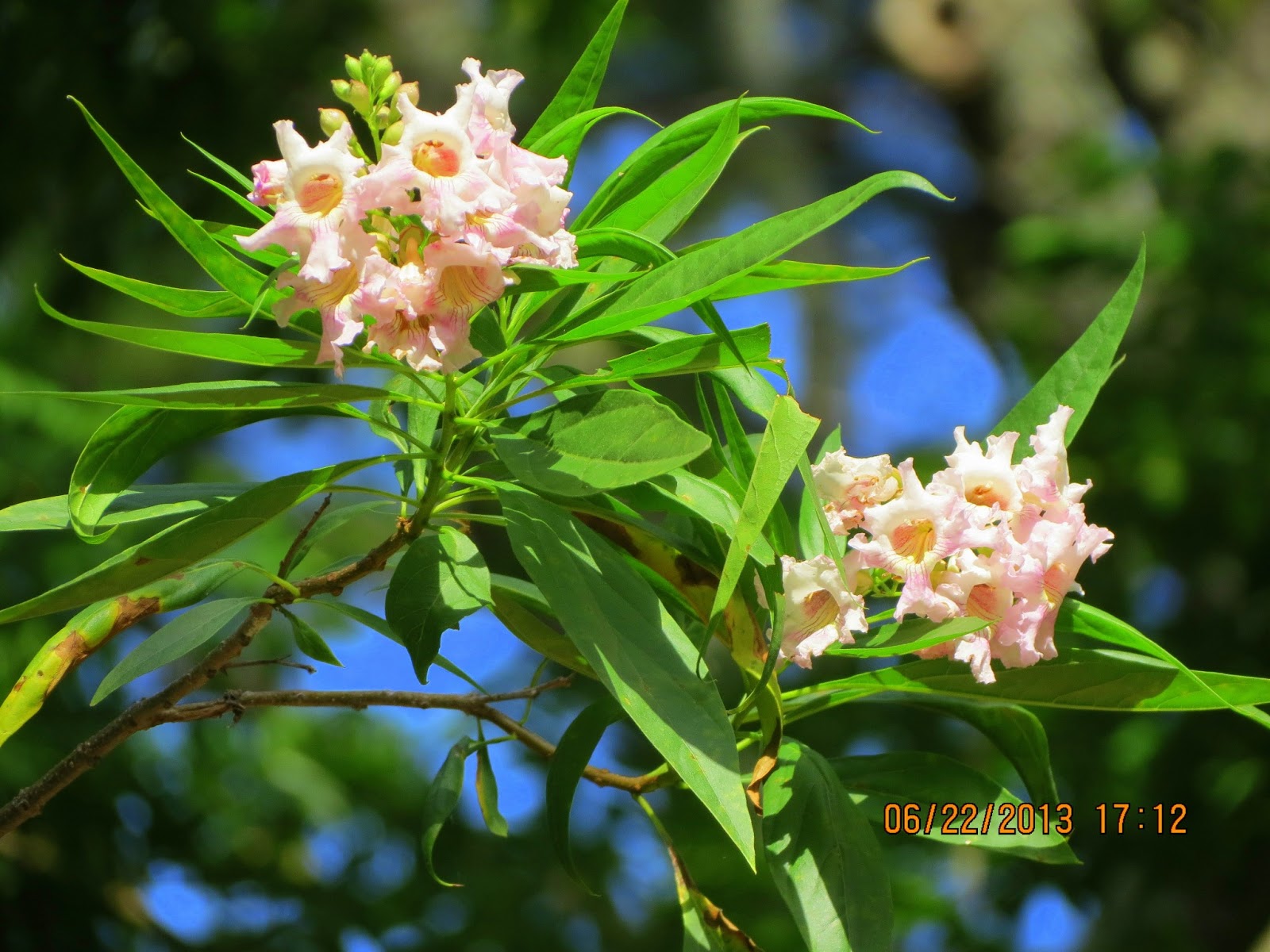
    Desert Willow
    http://en.wikipedia.org/wiki/Chilopsis

    Chilopsis

    From Wikipedia, the free encyclopedia
    Chilopsis is a genus of flowering plant, containing a single speciesChilopsis linearis. It is a small tree native to the southwestern United States and Mexico. The Hualapai people call it chimov and the Pima people call it aan.Despite the common name Desert-willow, given because of its willow-like leaves, it is actually a member of thebignonia family, Bignoniaceae. It is commonly seen in washes and along riverbanks at elevations below 1500 m in its range.

    A large specimen in flower
    Ranging from 1.5 to as much as 8 meters in height, it can have the general appearance of either a shrub or a small tree. The linear curved leaves, ranging from 10–26 cm in length and 2–4 mm broad, aredeciduous.
    The generic name is derived from the Greek words χεῖλος, (cheilos), meaning "lip," and ὄψις (opsis), meaning "resembling," referring to theflowers. They occur in a terminal panicle or raceme; the bloom starts in May, and progresses into September, with 2-4 flowers open at any one time. The calyx is about 8–14 mm, slightly inflated, and varying shades of purple, while the corolla is 2–5 cm, and with colors ranging from lavender to light pink. The throat and lower lip has a pattern of yellow ridges and purple lines, and the margins are crinkled. It is pollinated primarily by large bees in the family Apidae, such as carpenter beesbumblebeesAnthophora, and Centris. Thefruit is a linear "pod" up to 35 cm long, containing numerous winged seeds.
    Chilopsis linearis
    Flowers
    Scientific classification
    Kingdom:Plantae
    (unranked):Angiosperms
    (unranked):Eudicots
    (unranked):Asterids
    Order:Lamiales
    Family:Bignoniaceae
    Tribe:Tecomeae
    Genus:Chilopsis
    D.Don[1]
    Species:C. linearis
    Binomial name
    Chilopsis linearis
    (Cav.Sweet


    Coral Bean Tree
    http://en.wikipedia.org/wiki/Erythrina_herbacea

    Erythrina herbacea

    From Wikipedia, the free encyclopedia
    Erythrina herbacea, commonly known as the Coral BeanCherokee BeanRed Cardinal or Cardinal Spear, is a flowering shrub or small tree found throughout the southeastern United States and northeastern Mexico;[1] it has also been reported from parts of Central America and, as an introduced species, from Pakistan. Various other systematic names have been used for this plant in the past, including Erythrina arboreaErythrina hederifolia,Erythrina humilisErythrina rubicundaCorallodendron herbaceum and Xyphanthus hederifolius.

    Erythrina herbacea
    Flowers
    Scientific classification
    Kingdom:Plantae
    (unranked):Angiosperms
    (unranked):Eudicots
    (unranked):Rosids
    Order:Fabales
    Family:Fabaceae
    Genus:Erythrina
    Species:E. herbacea

    Description[edit]

    Coral Bean grows as a low shrub or small tree, reaching around 5 m (16 ft) in height in areas that do not kill it back by freezing;[2] elsewhere it may only reach 1.2 m (3.9 ft). Stems are covered in curved spines.[3] The leaves are yellowish-green, 15–20 cm (5.9–7.9 in) long and 6 cm (2.4 in) wide. The leaves are divided into three 2.5–8 cm (0.98–3.1 in) arrowhead-shaped leaflets.[2] The bark is smooth and light gray.[4] The tubular flowers are bright red and grow in long spikes,[5] each flower being 4–6.5 cm (1.6–2.6 in) long;[2] the tree blooms from April to July.[3]They are followed by 5–10 cm (2.0–3.9 in) pods containing bright red seeds, from which the tree gets its name.[2]The plant forms a woody caudex.[6] Toxic alkaloids, including erysopineerysothiopineerysothiovineerysovine,erythrinineerythroresincoralinerythric acid, and hypaphorine,[7] are found throughout the plant. These causeparalysis upon ingestion, much like curare.[8]


    From My Yard last week and today:


    ...this is brendasue signing off from Rainbow Creek. See You next time! Protect your pets, plants and Yourself from extreme HEAT.

    O+O