Hi Everybody!!

Hi Everybody!!
Welcome to my Hometown!!
Showing posts with label LOQUATS ARE BLOOMING. Show all posts

Sunday, December 15, 2013

THE KUMQUATS ARE READY AND THE LOQUATS STILL BLOOMING (A LITTLE BIT OF SUNSHINE IN MY DAY)


Hi Everybody!!
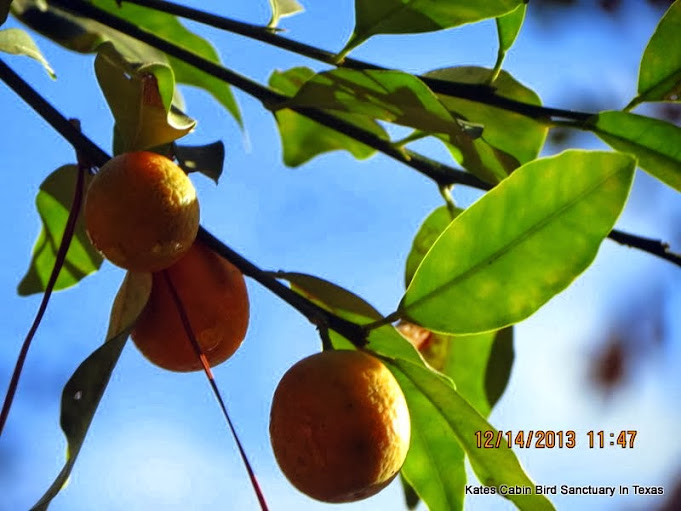
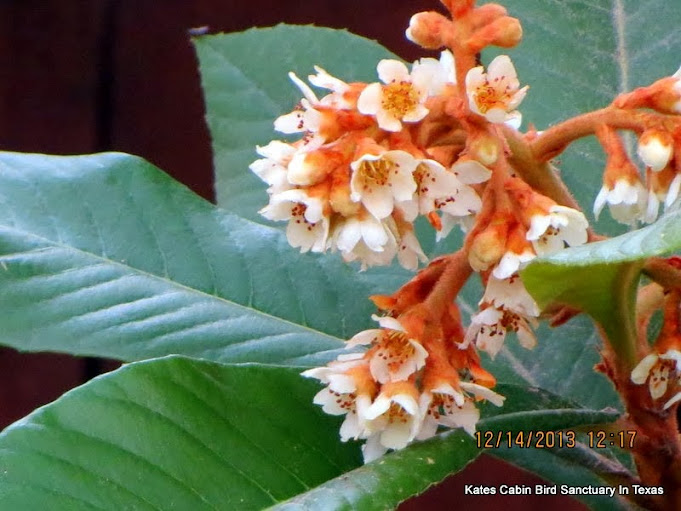
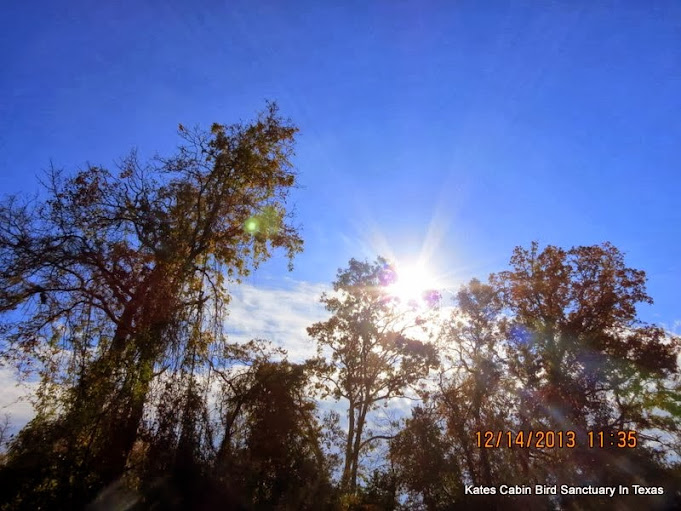
We have a tasty little treat for you tonight:  The Kumquats are ready! I will make a special chutney for Christmas. The light freeze did not hurt the Loquat blooms so they are still in bloom and bees are pollinating to make the fruit. What are Kumquats and Loquats? Below I have shared info from Wikipedia so you will be "in the know"! These fruits are not as popular in the States as in other parts of the world. I have trees of both growing in the yard and they are a great addition to any garden. More cold arrived today. For a short time, the morning cloud cover was frozen and split to reveal the blue sky and bright sunshine! I caught a little bit of Sunshine for your day before th cloud cover closed up. Enjoy!


Photo


link to photostudy in G+ album:
https://plus.google.com/u/0/photos/117645114459863049265/albums/5957415835266631377


Kumquat


https://en.wikipedia.org/wiki/Kumquat

Kumquat

From Wikipedia, the free encyclopedia
Kumquats or cumquats are a group of small fruit-bearing trees in the flowering plantfamily Rutaceae, either forming the genus Fortunella, or placed within Citrus sensu lato. The edible fruit closely resembles that of the orange (Citrus sinensis), but it is much smaller and ovular, being approximately the size and shape of a large olive. The English name "kumquat" derives from the Cantonese pronunciation gam1 gwat1 (given in Jyutping romanization).
They are slow-growing evergreen shrubs or short trees, from 2.5 to 4.5 meters (8 to 15 ft) tall, with dense branches, sometimes bearing small thorns. The leaves are dark glossy green, and the flowers are white, similar to other citrus flowers, borne singly or clustered in the leaf-axils. Depending on size, the kumquat tree can produce hundreds or even thousands of fruits each year.[1] The tree can be hydrophytic, grown in water, with the fruit often found floating on water near shore during the ripe season.[citation needed]
The plant is native to south Asia and the Asia-Pacific region. The earliest historical reference to kumquats appears in literature of China in the 12th century. They have long been cultivated in Japan, Taiwan, the Philippines, and southeast Asia. They were introduced to Europe in 1846 by Robert Fortune, collector for the London Horticultural Society, and shortly thereafter into North America.


Kumquat
Malayan kumquat foliage and fruit
Scientific classification
Kingdom:Plantae
(unranked):Angiosperms
(unranked):Eudicots
(unranked):Rosids
Order:Sapindales
Family:Rutaceae
Subfamily:Aurantioideae
Tribe:Citreae
Genus:Citrus
Species:C. japonica


Round kumquat[edit]

When the kumquats are divided into multiple species, the name Fortunella japonica(or Citrus japonica) is retained by this group. The round kumquat also called Marumi kumquat or Morgani kumquat, is an evergreen tree, producing edible golden-yellow fruit. The fruit is small and usually round but can be oval shaped. The peel has a sweet flavor but the fruit has a sour center. The fruit can be eaten cooked but is mainly used to make marmalades and jellies. It is grown as an ornamental plant and can be used in bonsai. The plant symbolizes good luck in China and other Asian countries, where it is kept as a houseplant and given as a gift during the Lunar New Year. Round kumquats are more commonly cultivated than other species due to their cold tolerance.

Cultivation and uses[edit]

Kumquats are cultivated in China, South Korea, North Korea, Taiwan, Southeast Asia,Nepal, Japan, the Middle East, Iran, Europe (notably Corfu, Greece), southernPakistan, and the southern United States (notably Florida, Louisiana, Alabama) and California.
They are much hardier than other citrus plants such as oranges. The 'Nagami' kumquat requires a hot summer, ranging from 25 °C to 38 °C (77 °F to 100 °F), but can withstand frost down to about −10 °C (14 °F) without injury. They grow in the tea hills of Hunan, China, where the climate is too cold for other citrus fruits, even theMikan (also known as the Satsuma) orange. The trees differ also from other citrus species in that they enter into a period of winter dormancy so profound that they will remain in it through several weeks of subsequent warm weather without putting out new shoots or blossoms. Despite their ability to survive low temperatures, kumquat trees grow better and produce larger and sweeter fruits in warmer regions.
Kumquats do not grow well from seeds and so are vegetatively propagated, using rootstock of another citrus fruit.[4]

Uses[edit]

Kumquats are often eaten raw. As the rind is sweet and the juicy center is sour, the raw fruit is usually consumed either whole—to savor the contrast—or only the rind is eaten. The fruit is considered ripe when it reaches a yellowish-orange stage and has just shed the last tint of green.
Culinary uses include candying and kumquat preserves, marmalade, and jelly. Kumquats can also be sliced and added to salads. In recent years kumquats have gained popularity as a garnish for cocktail beverages, including the martini as a replacement for the more familiar olive. A kumquat liqueur mixes the fruit with vodka or other clear spirit. Kumquats are also being used by chefs to create a niche for their desserts[clarification needed] and are common in European countries.[citation needed]
The Cantonese often preserve kumquats in salt or sugar.[citation needed] A batch of the fruit is buried in dry salt inside a glass jar. Over time, all the juice from the fruit is diffused into the salt. The fruit in the jar becomes shrunken, wrinkled, and dark brown in color, and the salt combines with the juice to become a dark brown brine. A few salted kumquats with a few teaspoons of the brine/juice may be mixed with hot water to make a remedy for sore throats.[citation needed]A jar of such preserved kumquats can last several years and still keep its flavor.[citation needed]
In the Philippines and Taiwan, kumquats are a popular addition to green tea and black tea, either hot or iced.[citation needed]
In Vietnam, kumquat bonsai trees (round kumquat plant) are used as a decoration for the Tết (Lunar New Year) holiday. Kumquat fruits are also boiled or dried to make a candied snack called mứt quất.[citation needed]
Variants of the kumquat are grown specially in India.
The kumquat is celebrated annually in Dade City, Florida, U.S.A. with the annual Kumquat Festival.


Loquat


https://en.wikipedia.org/wiki/Loquat


Loquat

From Wikipedia, the free encyclopedia
The loquat (Eriobotrya japonica) is a species of flowering plant in the family Rosaceae,native to south-central China.[2] It is a large evergreen shrub or small tree, grown commercially for its yellow fruit, and also cultivated as an ornamental plant. It was formerly thought to be closely related to the genus Mespilus, and is still sometimes known as the Japanese medlar. It is also known as Japanese plum[3] and Chinese plum.[4] In Japan it is called biwa.[5] And in China, it is called Lo Guat (芦橘) inCantonese and pipa (枇杷) in Mandarin.


Loquat
Eriobotrya japonica
Loquat leaves and fruits
Scientific classification
Kingdom:Plantae
(unranked):Angiosperms
(unranked):Eudicots
(unranked):Rosids
Order:Rosales
Family:Rosaceae
Genus:Eriobotrya
Species:E. japonica

Fruit[edit]


Ripe and oblong loquat fruit
Loquats are unusual among fruit trees in that the flowers appear in the autumn or early winter, and the fruits are ripe in late winter or early spring. The flowers are 2 cm (1 in) in diameter, white, with five petals, and produced in stiff panicles of three to ten flowers. The flowers have a sweet, heady aroma that can be smelled from a distance.
Loquat fruits, growing in clusters, are oval, rounded or pear-shaped, 3–5 cm long, with a smooth or downy, yellow or orange, sometimes red-blushed skin. The succulent, tangy flesh is white, yellow or orange and sweet to subacid or acid, depending on the cultivar.
Each fruit contains from one to ten ovules, with three to five being most common.[6] A variable number of the ovules mature into large brown seeds. The skin, though thin, can be peeled off manually if the fruit is ripe. In Egypt varieties with sweeter fruits and fewer seeds are often grafted on inferior quality specimens.[citation needed]
The fruits are the sweetest when soft and orange. The flavor is a mix of peach, citrus and mild mango.

Culinary use

The loquat has a high sugar, acid, and pectin content. It is eaten as a fresh fruit and mixes well with other fruits in fresh fruit salads or fruit cups. The fruits are also commonly used to make jam, jelly, and chutney, and are often served poached in light syrup. Firm, slightly immature fruits are best for making pies or tarts.
The fruit is sometimes canned. The waste ratio, however, is 30 percent or more, due to the seed size.
The fruit is also processed into confectioneries.
Loquats are abundant in Pakistan, from Islamabad north, during the month of April, where the sour unripe fruit are used to make chutneys and sauces.

Photo


Photo

...this is brendasue signing off from Rainbow Creek.  See You next time! Brrrrrrrrrrrr! It is cold here!


O+O

Friday, December 6, 2013

LET IT SNOW (?) AND (THE LOQUATS ARE BLOOMING PHOTO BLOG)


Hi Everybody!!
You might notice the 'guard dog on duty' here at the Wild Bird Sanctuary. He is on high alert for Snow! On Wednesday it was a record 85 degrees and today, Friday, it is 33 right now. They say about Texas: "If you do not like the weather, wait a minute and it will change". This part of Texas has missed the ice and snow so far today. The weather outside is frightful and the fire is so delightful......With the magic of GoogleEarth, we will have snow on this blog tonight! Let it Snow!
*Reminder: Hempstead Bluebonnet Open House Christmas Party is Postponed until next Saturday, the 14th.***


The Snow is from our friends at G+ Auto Awesome Backup! Thanks for the Smiles
Photo

http://en.wikipedia.org/wiki/Let_It_Snow!_Let_It_Snow!_Let_It_Snow!

Let It Snow! Let It Snow! Let It Snow!

From Wikipedia, the free encyclopedia
"Let It Snow! Let It Snow! Let It Snow!", also known as "Let It Snow", is a song written by lyricist Sammy Cahn and composerJule Styne in July 1945. It was written in Hollywood, California during one of the hottest days on record.

Recording history[edit]

First recorded in 1945 by Vaughn Monroe,[1] it became a popular hit, reaching No. 1 on the Billboard music chart the following year. One of the best-selling songs of all time, "Let It Snow!" has been covered countless times. Due to its seasonal lyrics, it is commonly regarded as a Christmas song. However, the song has no Christmas references and is therefore a seasonal song shared by those who do not join in the celebration of Christmas.
In 1945, Woody Herman recorded the song with himself on vocals and an iconic trumpet solo by Sonny Berman.
In 1950, Frank Sinatra recorded the song with The Swanson Quartet.
In 1959, Dean Martin recorded the song for his album A Winter Romance. He also recorded a different version in 1966 for The Dean Martin Christmas Album.
In 1963, Smokey Robinson & The Miracles recorded the song for their holiday album, Christmas with The Miracles.
In 1964, Doris Day recorded the song for her first holiday album, The Doris Day Christmas Album.
In 1965, Andy Williams recorded the song for his second holiday album, Merry Christmas.
In 1993, Aaron Neville recorded the song for his Christmas album, Aaron Neville's Soulful Christmas.
In 1997, country group Ricochet recorded a Barbershop music-style (but accompanied) version of the song, released as a single.
In 1998, Chicago recorded the song for their first Christmas album, Chicago XXV. In 1998 Martina McBride recorded an uptempo version of the song, which was released as the first single from her album White Christmas. The song reached No. 64 on the Hot Country Songs chart.
In 2003, Michael Buble recorded the song for his holiday EP, Let It Snow.
In 2004 Royce Campbell recorded the song on his CD, "A Jazz Guitar Christmas." In 2004 Chris Isaak also recorded the song for his album Christmas.
In 2004, Contemporary Christian artist The Katinas covered the song on their 2004 album Family Christmas.
In 2005, the song was covered by Carly Simon but was sung from the point of view of the host instead of the guest.
In 2006, Celtic Woman recorded the song for their second album, Celtic Woman: A Christmas Celebration. Celtic Woman also performed the song as part of their A Christmas Celebration concert on 7 December 2007 at the The Helix in Dublin. In 2006 it was also recorded by Twisted Sister for their holiday album A Twisted Christmas.
In 2010, Lady Antebellum recorded the song for their holiday EP, A Merry Little Christmas. In 2010 it was also recorded by The Puppini Sisters for their holiday album Christmas with The Puppini Sisters, Alyson Stoner (as Isabella Garcia-Shapiro) covered the song for the Christmas album Phineas and Ferb: Holiday Favorites, and Kylie Minogue released a version on iTunes.
In 2011, Cascada recorded a version of the song to promote a potential Christmas album, along with a music video featuring Natalie Horler and Yanou in the studio. This version was included on their 2012 Christmas album, It's Christmas Time. WestcountyScrumpy and Western band The Wurzels also recorded the song for their 2011 Christmas Album.[2] Also in 2011, Chris Colfer andDarren Criss performed the song on the TV show Glee as Kurt Hummel and Blaine Anderson respectively in the episode "Extraordinary Merry Christmas". It had been released the month before on the album Glee: The Music, The Christmas Album Volume 2.
In 2012, Airborne recorded the song for their holiday album, Christmas: Holiday Music. In 2012 it was also recorded by Christina Perri for her holiday album A Very Merry Perri Christmas, Blake Shelton for his holiday album Cheers, It's Christmas and Alexander Rybak for his album Christmas-Tales.
Also in 2012, Rod Stewart recorded the song for his first holiday album, Merry Christmas, Baby. His version reached No. 1 onBillboard's Adult Contemporary chart in December 2012.[3] The song remained in the No. 1 spot for a total of five weeks, tying it for the longest leading rendition of a holiday title in the history of the chart.[4]
In 2013, Jewel recorded the song for her second holiday album, Let It Snow.


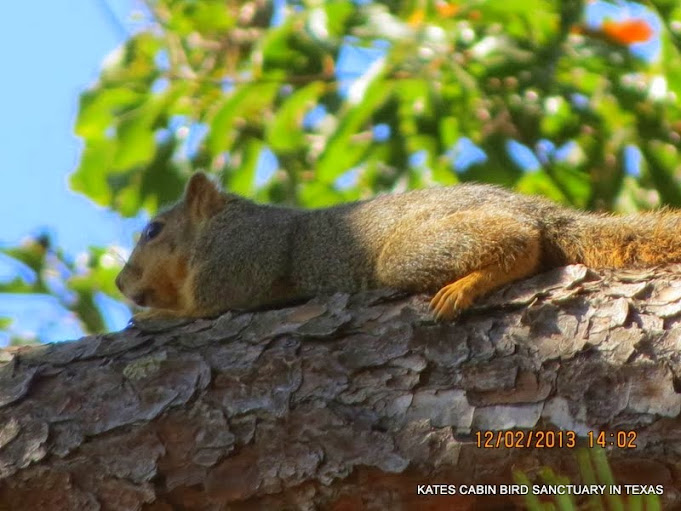
Squirrel Nest


Squirrel


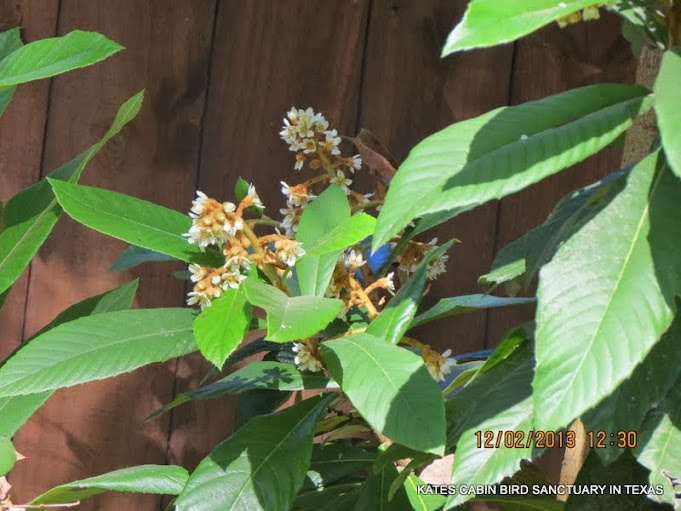
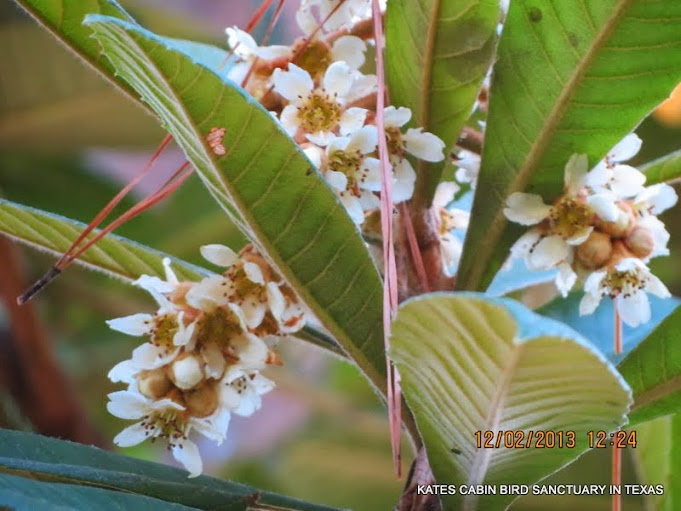
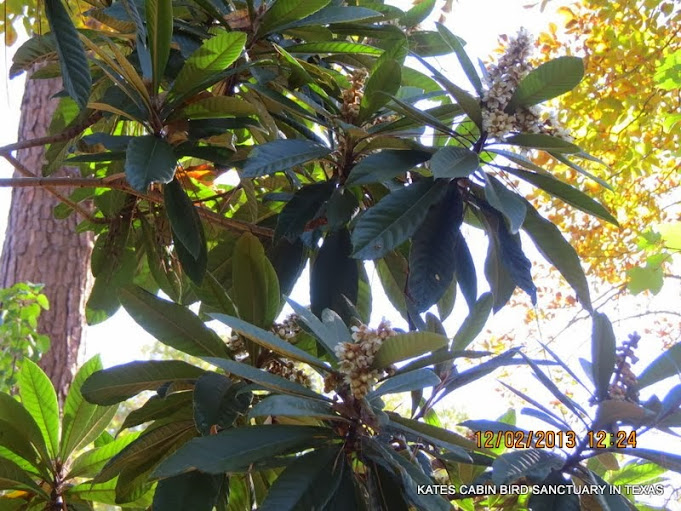
The Loquats are blooming

http://en.wikipedia.org/wiki/Loquat


Loquat

From Wikipedia, the free encyclopedia

The loquat (Eriobotrya japonica) is a species of flowering plant in the family Rosaceae,native to south-central China.[2] It is a large evergreen shrub or small tree, grown commercially for its yellow fruit, and also cultivated as an ornamental plant. It was formerly thought to be closely related to the genus Mespilus, and is still sometimes known as the Japanese medlar. It is also known as Japanese plum[3] and Chinese plum.[4] In Japan it is called biwa.[5] And in China, it is called Lo Guat (芦橘) inCantonese and pipa (枇杷) in Mandarin.


Loquat
Eriobotrya japonica
Loquat leaves and fruits
Scientific classification
Kingdom:Plantae
(unranked):Angiosperms
(unranked):Eudicots
(unranked):Rosids
Order:Rosales
Family:Rosaceae
Genus:Eriobotrya
Species:E. japonica
Binomial name
Eriobotrya japonica
(Thunb.) Lindl.


Description

Eriobotrya japonica is a large evergreen shrub or small tree, with a rounded crown, short trunk and woolly new twigs. The tree can grow to 5–10 metres (16–33 ft) tall, but is often smaller, about 3–4 metres (9.8–13 ft). The leaves are alternate, simple, 10–25 cm long, dark green, tough and leathery in texture, with a serrated margin, and densely velvety-hairy below with thick yellow-brown pubescence; the young leaves are also densely pubescent above, but this soon rubs off.

Fruit[edit]


Ripe and oblong loquat fruit
Loquats are unusual among fruit trees in that the flowers appear in the autumn or early winter, and the fruits are ripe in late winter or early spring. The flowers are 2 cm (1 in) in diameter, white, with five petals, and produced in stiff panicles of three to ten flowers. The flowers have a sweet, heady aroma that can be smelled from a distance.
Loquat fruits, growing in clusters, are oval, rounded or pear-shaped, 3–5 cm long, with a smooth or downy, yellow or orange, sometimes red-blushed skin. The succulent, tangy flesh is white, yellow or orange and sweet to subacid or acid, depending on the cultivar.
Each fruit contains from one to ten ovules, with three to five being most common.[6] A variable number of the ovules mature into large brown seeds. The skin, though thin, can be peeled off manually if the fruit is ripe. In Egypt varieties with sweeter fruits and fewer seeds are often grafted on inferior quality specimens.[citation needed]
The fruits are the sweetest when soft and orange. The flavor is a mix of peach, citrus and mild mango.

History[edit]


Loquats and a Mountain Bird, by an anonymous Chinese artist of theSouthern Song Dynasty (1127–1279).
The loquat is originally from southeastern China. It was introduced into Japan and becamenaturalised there in very early times, and has been cultivated there for over 1,000 years. It has also become naturalised in Afghanistan, Kenya, India, Iraq, the whole Mediterranean Basin, Pakistan and many other areas. Chinese immigrants are presumed to have carried the loquat to Hawaii.
The loquat was often mentioned in ancient Chinese literature, such as the poems of Li Bai. In Portuguese literature, it is mentioned since before the Age of Discovery.[7]

Cultivation[edit]

Over 800 loquat cultivars exist in Asia. Self-fertile variants include the 'Gold Nugget' and 'Mogi' cultivars.[8] The loquat is easy to grow in subtropical to mild temperate climates where it is often primarily grown as an ornamental plant, especially for its sweet-scented flowers, and secondarily for its delicious fruit. The boldly textured foliage adds a tropical look to gardens, contrasting well with many other plants. It is popular in the American South as an ornamental plant for its blossoms, though winter frosts rarely allow the flowers to survive and bear fruit the following spring.

Loquat in flower. This is a cultivarintended for home-growing, where the flowers open gradually resulting in fruit also ripening gradually.
There are many named cultivars, with orange or white flesh.[9] Some cultivars are intended for home-growing, where the flowers open gradually, and thus the fruit also ripens gradually, compared to the commercially grown species where the flowers open almost simultaneously, and the whole tree's fruit also ripens together.
Japan is the leading producer of loquats followed by Israel and then Brazil.[9]
In temperate climates it is grown as an ornamental with winter protection, as the fruits seldom ripen to an edible state. In the United Kingdom, it has gained the Royal Horticultural Society's Award of Garden Merit.[10]
In the highland parts of Central America, the loquat has become naturalized, and is often found growing wild in areas that have been disturbed but abandoned, its seeds having been dispersed by birds. Below 1000 meters, the fruit remains inedible for its high acidity, but above it, the wild fruit is appreciated and much harvested for its sweet, fruity flavor. It is occasionally planted for living fenceposts, as the tree is long-lived, not much subject to disease, and the wood is hard and durable. Good quality logs are much sought-after by furniture makers in Central America, who prize its hardness and durability[citation needed].
In the US, the loquat tree is hardy only in USDA zones 8 and above, and will flower only where winter temperatures do not fall below30 °F (−1 °C). In such areas, the tree flowers in autumn and the fruit ripens in late winter.[8]


Link to Album Photustudy in G+ Gallery:
https://plus.google.com/u/0/photos/117645114459863049265/albums/5954056158661130609


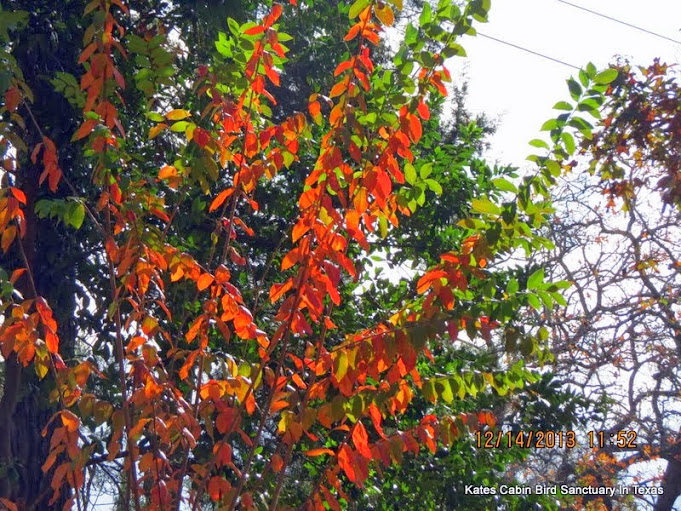
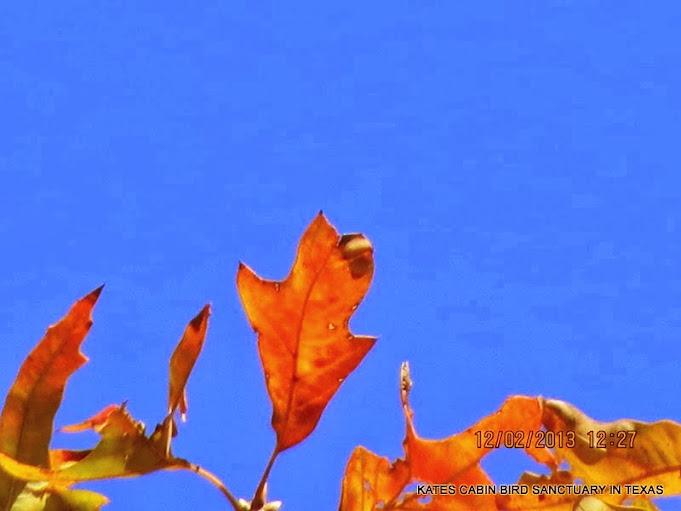
Fall Color On My Trees


...this is brendasue signing off from Rainbow Creek.  See You next time. 
Stay Warm and Comfortable!

O+O