Hi Everybody!!

Hi Everybody!!
Welcome to my Hometown!!
Showing posts with label RED-BELLIED WOODPECKER. Show all posts

Sunday, May 11, 2014

MY MOTHER'S DAY PRESENT: (A BABY WOODPECKER PHOTO BLOG!)


Hi Everybody!!
WOW oh wow-what a great day over here! I hope all of you had a good Mother's Day and that you gave a moment of thought about Mothers, especially your Mom. Thank You to Google for celebrating with Mother's Day Doodle. I had the pleasure of seeing the baby woodpecker for the first time since he hatched. His Mom and Dad have been taking food in for a few days and finally he popped his head out to say: Hi Everybody!! The photostudy is the only shots of this baby in the nest. The nest will be vacant until next Spring. I hope you feel the joy of a new Mom (or Dad) viewing this precious red-bellied woodpecker of Rainbow Creek 2014!!

Thanks to auto Awesome for the quick clips!
Photo


Photo


Photo


https://en.wikipedia.org/wiki/Red-bellied_Woodpecker

Red-bellied Woodpecker

From Wikipedia, the free encyclopedia


Red-bellied Woodpecker
Adult male
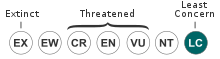
Conservation status
Scientific classification
Kingdom:Animalia
Phylum:Chordata
Class:Aves
Subclass:Neornithes
Infraclass:Neognathae
Superorder:Neoaves
Order:Piciformes
Suborder:Pici
Family:Picidae
Subfamily:Picinae
Tribe:Dendropicini
Genus:Melanerpes
Species:M. carolinus
Binomial name
Melanerpes carolinus
(Linnaeus, 1758)
Range of M. carolinus

The Red-bellied Woodpecker (Melanerpes carolinus) is a medium-sizedwoodpecker of the Picidae family. It breeds in southern Canada and the northeastern United States, ranging as far south as Florida and as far west as Texas. Its common name is somewhat misleading, as the most prominent red part of its plumage is on the head; the Red-headed Woodpecker, however, is another species that is a rather close relative but looks quite different.

File:Red-bellied Woodpecker Female.jpg
Adult female – showing reddish belly.

Description

Adults are mainly light gray on the face and underparts; they have black and white barred patterns on their back, wings and tail. Adult males have a red cap going from the bill to the nape; females have a red patch on the nape and another above the bill. The reddish tinge on the belly that gives the bird its name is difficult to see in field identification. They are 22.85 to 26.7 cm (9.00 to 10.51 in) long, and have a wingspan of 38 to 46 cm (15 to 18 in).[3]

Vocalizations[edit]

Red-bellied woodpeckers are noisy birds, and have many varied calls. Calls have been described as sounding like churr-churr-churror thrraa-thrraa-thrraa with an alternating br-r-r-r-t sound. Males tend to call and drum more frequently than females, but both sexes call. Often, these woodpeckers "drum" to attract mates. They tap on aluminum roofs, metal guttering, hollow trees and even transformer boxes, in urban environments, to communicate with potential partners. Babies have a high-pitchedbegging call of pree-pree-pree. They will continue to give a begging call whenever they see their parents for a while after fledging.
These birds mainly search out arthropods on tree trunks. They may also catchinsects in flight. They are omnivores, eating insects, fruits, nuts and seeds. Their breeding habitat is usually deciduous forests. They nest in the decayed cavities of dead trees, old stumps, or in live trees that have softer wood such as elmsmaples, or willows; both sexes assist in digging nesting cavities. Areas around nest sites are marked with drilling holes to warn others away.
Though the species is not globally threatened, it depends on large trees for nesting. In areas that are extensively deforested, the birds will sometimes utilize gardens, but for the most part simply will not be present in any numbers.[4]
File:Red bellied woodpecker nest.jpg
Peeking out of its nest


Foraging[edit]

As with all animals, foraging becomes an important role in an animal’s ability to survive and reproduce. The Red-bellied Woodpecker expresses foraging behavior by catching or storing food.[5] The woodpecker uses its bill for foraging as a chisel drilling into bark or probing cracks on trunk of trees.[5] In this manner, the Red-bellied Woodpecker is able to pull out beetles and other insects from the tree with the help of its long tongue.[5] This behavior is also seen for storing food from other animals by hiding food behind bark or deep in cracks of a tree.[5] According to studies from Williams 1975, Breitwisch 1977, and Batzil 1979, the Red-bellied Woodpecker spent 20% to 69% foraging on dead or decaying trees. In addition, Williams 1975, Breitwisch 1977, and Batzil 1979 observed Red-bellied Woodpecker 80% gleaning and probing and 10% excavating on trees in South Florida pine habitat.[6]The Red-bellied Woodpecker relies on snags or dying trees for foraging and nesting.[7]

File:A female Red-bellied Woodpecker feeding her chick.jpg
A female Red-bellied Woodpecker feeding her chick


Predation[edit]

Predators of adult Red-bellied Woodpeckers include birds of prey such as Sharp-shinned hawks and Cooper's hawks, black rat snakes and house cats. Known predators of nestlings and eggs include Red-headed Woodpeckers, owls, Pileated Woodpeckers, gray rat snakes and black rat snakes. When approached by apredator, Red-bellied Woodpeckers either hide from the predator, or harass it with alarm calls. They defend their nests and young aggressively, and may directly attack predators that come near the nest.

Breeding[edit]

In early May, the Red-bellied Woodpeckers begin breeding activities by drumming patterns; such as, slow taps followed by short rapid drumming.[8] Woodpeckers depend on dead and drying wood for nesting purposes. The male Red-bellied Woodpecker takes the initiative in locating a nest hole. He will then seek approval from his female mate by mutual tapping.[9] The Red-bellied Woodpecker excavates holes in trees for nesting and roosting.[10] By excavating cavities, they play an important role in the forest communities for other species as well.[7] For example, species such as squirrels and bats use these cavities as shelter.[10] The female Red-bellied Woodpecker accepts the nesting hole by completing the excavation and entering the nest hole.
Researchers have documented that Red-bellied Woodpeckers have the tendency to nest in clear areas with only few trees.[10] Studies have indicated that close canopy areas does not impact the bird’s nesting behavior; however, further studies are needed and are in progress.[10] Red-bellied Woodpeckers are territorial during the nesting season and they breed once per year. A pair-breeding woodpecker begins nesting in April or May holding a year-round territories and showing high site fidelity.[11]
Red-bellied Woodpeckers depend on dead trees for nesting.[12] Recent studies have shown that these woodpeckers experienced low breeding due to cutting sites of dead trees; however, predators are still of main concern.[12][13] The juvenile Red-bellied Woodpecker are ready to fledge its nest at 24 to 26 days of age. Natal dispersal has been observed on juvenile Red-bellied Woodpeckers.[11] The juvenile Red-bellied Woodpecker remains approximately 27 weeks in its natal area afterfledging.[11] In some cases, the woodpecker may return to its natal area for breeding depending on predation levels and food resources.[11]

Courtship[edit]

It has been noted that vocal signals in Red-bellied Woodpeckers is used to attract and communicate with potential mates.[9]A low “grr, grr” sound is observed in a pair of woodpeckers from the start of courtship until the end of the breeding season.[9]In an intraspecific conflict, the Red-bellied Woodpeckers usually make a loud “chee-wuck, chee-wuck, chee-wuck” sound. As indicated by Kilham 1983, the Red-bellied Woodpecker drums with its bill during conflict situation and taps to maintain pair bonding. An example of a conflict event between Red-bellied Woodpeckers would be competing for the same mate. Nevertheless, the Red-bellied Woodpeckers are known to be in monogamous relationships.


Link to photostudy in my G+ Albums:
https://plus.google.com/u/0/photos/117645114459863049265/albums/6012169438660367361


I saw the baby one more time this cloudy morning. The Dad was on top of the tree above the nest. That means the baby is going to fly today! He will not come back to the nest anymore, they live in the trees now. Here are the last pics in the nest from this morning. This has been the greatest Mother's Day gift for an old Bird Lady. Thank You to all of You who wished me a nice day. My life is enriched because of YOU!


...this is brendasue signing off from Rainbow Creek.  See You next time!

O+O

Sunday, May 4, 2014

RED-BELLIED WOODPECKER AND PURPLE-TONGUED REBECCA (A MULBERRY EATING PHOTO BLOG)

Hi Everybody!!
I was sitting by the lake with my eyes closed and just listening. I kept hearing a red-bellied woodpecker who flew back to the same location repeatedly. Later on, I followed the sound and walked around to see what the woodpecker was doing. They are easy to find as they make noise when they find food!  Anyway, in the photostudy below, you will see I found him in a Mulberry Tree eating the ripe fruits. I called to my friend Rebecca to come and get it! For woodpeckers, Rebeccas and me,  seeing this tree bursting with sun sweetened berries is better than finding gold. Rebecca and I ate all the berries we could eat. Her tongue and teeth were purple, the white shirt was purple and the hands also purple! The red-bellied woodpecker was squawking mad as a hornet that we were raiding his private stash.(He had plenty on the top branches). I have shared Wikipedia Info below on the Mulberry Tree. I have some growing at my place, the white and the red. These are fast growing shade trees. When the berries are ready, the woodpeckers will let you know. Enjoy!


The Purple-Tongued Rebecca!


The Red-Bellied Woodpecker


Link to G+ Albums:
https://plus.google.com/u/0/photos/117645114459863049265/albums/6009649773254300369


Photo


https://en.wikipedia.org/wiki/Morus_(plant)

Morus (plant)

From Wikipedia, the free encyclopedia
Morus, a genus of flowering plants in the family Moraceae, comprises 10–16 species of deciduous trees commonly known as mulberries growing wild and under cultivation in many temperate world regions.[2]
The closely related genus Broussonetia is also commonly known as mulberry, notably the Paper MulberryBroussonetia papyrifera. Mulberries are swift-growing when young, but soon become slow-growing and rarely exceed 10–15 m (33–49 ft) tall. Theleaves are alternately arranged, simple, often lobed, more often lobed on juvenile shoots than on mature trees, and serrated on the margin.
Depending on the species, they can be monoecious or dioecious.[3]
The mulberry fruit is a multiple fruit, 2–3 cm (0.79–1.18 in) long. Immature fruits are white, green, or pale yellow. In most species, the fruits turn pink and then red while ripening, then dark purple or black, and have a sweet flavor when fully ripe. The fruits of the white-fruited cultivar are white when ripe; the fruit in this cultivar is also sweet but has a very mild flavor compared with the darker variety.
Mulberry
Morus nigra
Scientific classification
Kingdom:Plantae
(unranked):Angiosperms
(unranked):Eudicots
(unranked):Rosids
Order:Rosales
Family:Moraceae
Tribe:Moreae[1]
Genus:Morus
L.

Uses and cultivation[edit]


Mulberry fruit in Libya
The ripe fruit is edible and is widely used in pies, tarts, wines, cordials and tea. The fruit of the black mulberry, native to southwest Asia, and the red mulberry, native to eastern North America, have the strongest flavor, which has been likened to 'fireworks in the mouth'.[4]
The fruit of the white mulberry, an east Asian species which is extensively naturalized in urban regions of eastern North America, has a different flavor, sometimes characterized as refreshing and a little tart, with a bit of gumminess to it and a hint of vanilla.[5][6] In North America the white mulberry is considered an invasive exotic and has taken over extensive tracts from native plant species, including the red mulberry.[7] The mature plant contains significant amounts of resveratrol, particularly in stem bark.[8] The fruit and leaves are sold in various forms as nutritional supplements. Unripe fruit and green parts of the plant have a white sap that may be toxic, stimulating, or mildly hallucinogenic.[9]
Black, red, and white mulberry are widespread in southern Europe, the Middle Eastnorthern Africa and Indian Subcontinentwhere the tree and the fruit have names under regional dialectsJams and sherbets are often made from the fruit in this region. Black mulberry was imported to Britain in the 17th century in the hope that it would be useful in the cultivation of silkworms. It was much used in folk medicine, especially in the treatment of ringworm. Mulberries are also widespread inGreece, particularly in the Peloponnese, which in the Middle Ages was known as Morea (GreekΜωριάςMorias), deriving from the Greek word for the tree (GreekΜουριάΜouria).
Mulberries can be grown from seed, and this is often advised as seedling-grown trees are generally of better shape and health, but they are most often planted from large cuttings which root readily. The mulberry plants which are allowed to grow tall with a crown height of 5–6 feet from ground level and a stem girth of 4–5 inches or more is called tree mulberry. They are specially raised with the help of well-grown saplings 8–10 months old of any of the varieties recommended for rain-fed areas like S-13 (for red loamy soil) or S-34 (black cotton soil) which are tolerant to drought or soil-moisture stress conditions. Usually, the plantation is raised and in block formation with a spacing of 6 feet x 6 feet, or 8 feet x 8 feet, as plant to plant and row to row distance. The plants are usually pruned once a year during the monsoon season (July – August) to a height of 5–6 feet and allowed to grow with a maximum of 8–10 shoots at the crown. The leaves are harvested 3–4 times a year by a leaf picking method[clarification needed] under rain-fed or semi-arid conditions, depending on the monsoon.
The tree branches pruned during the fall season (after the leaves have fallen) are cut and used to make durable baskets supporting agriculture and animal husbandry.
Some North American cities have banned the planting of mulberries because of the large amounts of pollen they produce, posing a potential health hazard for some pollen allergy sufferers.[10]

Silk industry[edit]


A silkworm, Bombyx mori, feeding on a mulberry tree
Mulberry leaves, particularly those of the white mulberry, are ecologically important as the sole food source of the silkworm (Bombyx mori, named after the mulberry genus Morus), the pupa/cocoon of which is used to make silk.[11][12] OtherLepidoptera larvae—which include the common emerald, the lime hawk-moth, and the sycamore moth—also sometimes eat the plant.

Pigments[edit]

Mulberry fruit contains anthocyanins, which may prove useful as dietary modulators of mechanisms for various diseases[13][14] Anthocyanins are responsible for the attractive colors of fresh plant foods, including orange, red, purple, black, and blue. These colors are water-soluble and easily extractable, yielding natural food colorants. Due to a growing demand for natural food colorants, their significance in the food industry is increasing.
A cheap and industrially feasible method has been developed to extract anthocyanins from mulberry fruit which could be used as a fabric tanning agent or food colorant of high color value (above 100). Scientists found that, of thirty-one Chinese mulberry cultivars tested, the total anthocyanin yield varied from 148 mg to 2725 mg per liter of fruit juice.[15] It was also found that all the sugars, acids, and vitamins of the fruit remained intact in the residual juice after removal of the anthocyanins, so the juice could be used to produce products such as juice, wine, and sauce.
Anthocyanin content depends on climate and area of cultivation and is particularly high in sunny climates.[16] This finding holds promise for tropical countries that grow mulberry trees as part of the practice of sericulture to profit from industrial anthocyanin production through the recovery of anthocyanins from the mulberry fruit.
This offers a challenging task to the mulberry germplasm resources for
  • exploration and collection of fruit yielding mulberry species;
  • their characterization, cataloging, and evaluation for anthocyanin content by using traditional as well as modern means and biotechnology tools;
  • developing an information system about these cultivars or varieties;
  • training and global coordination of genetic stocks;
  • evolving suitable breeding strategies to improve the anthocyanin content in potential breeds by collaboration with various research stations in the field of sericulture, plant genetics, and breeding, biotechnology and pharmacology.

In popular culture[edit]


A Mulberry tree in England
The nursery rhyme Here We Go Round the Mulberry Bush uses the tree in the refrain, as do some contemporary American versions of the nursery rhyme Pop Goes the Weasel. Vincent van Gogh featured the mulberry tree in some of his paintings, notably "Mulberry Tree."[17]
The Roman mythological tale of Pyramus and Thisbe provides a story of the mulberry fruit's color. According to the tale, after the two lovers die tragically, the gods listen to Thisbe's lament and forever change the color of the mulberry fruits into their red stained color to honor the forbidden love.


Photo


You Go Girl!


The Guard Dogs!


...this is brendasue signing off from Rainbow Creek.  See You next time!


Scott Lake


O+O