Hi Everybody!!

Hi Everybody!!
Welcome to my Hometown!!
Showing posts with label SNOW. Show all posts

Wednesday, January 29, 2014

WINTER STORM LEON (HAS COME AND GONE PHOTO BLOG)


Hi Everybody!!
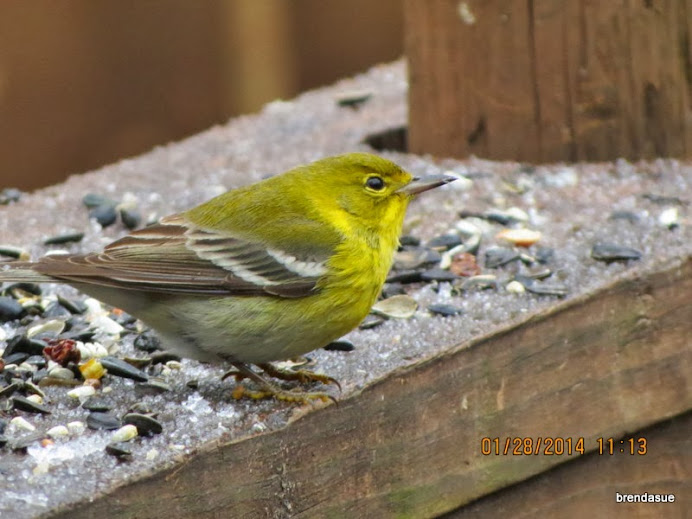
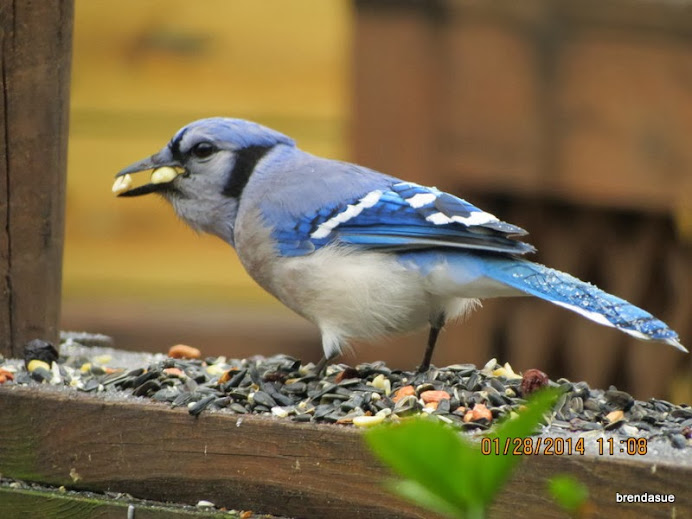
Winter marches on as another 'Winter Storm' has come and gone. This time as the wintry mix approached, there were advance road and school closures. Fortunately for South Texas, this storm did not hit us with full force so we ended up with a light dusting of ice and no snow here. I shot the pics of the birds at the "height" of the ice accumulation on the deck. Personally, I do not drive if the word ice is involved. My friend in Canada, +jerry robin , posted a photo of a snow plow he was driving behind. (I was amazed as I have never seen one!) For your info tonight, I have shared from Wikipedia about 'Winter Storm'. Also, You will find a link to the Weather Channel where you can get updates on any storm system. Be careful and be prepared is the best advice for any storm. Stay Warm! 
(And Feed the Birds!)

*Special Treat: +jerry robin 's photo in Canada:
https://plus.google.com/u/0/photos/102923542908465810060/albums/5974161388730125697/5974161387216252354?pid=5974161387216252354&oid=102923542908465810060


WOW- Thanks for sharing +jerry robin !!

Back in Texas:


American Goldfinch


https://en.wikipedia.org/wiki/Winter_storm

Winter storm

From Wikipedia, the free encyclopedia
A winter storm is an event in which the varieties of precipitation are formed that only occur at low temperatures, such as snow or sleet, or a rainstorm where ground temperatures are low enough to allow ice to form (i.e. freezing rain). In temperate continental climates, these storms are not necessarily restricted to the winter season, but may occur in the late autumn and early spring as well. Very rarely, they may form in summer, though it would have to be an abnormally cold summer, such as the summer of1816 in the Northeast United States of America.


Snow[edit]

Chicago's Fullerton Harbor looking south during the January 31–February 2, 2011 North American winter storm (left) and on a clear day for comparison

Approaching winter storm in Salt Lake City.
Snowstorms are storms where large amounts of snow fall. Snow is less dense thanliquid water, by a factor of approximately 10 at temperatures slightly below freezing, and even more at much colder temperatures.[citation needed] Therefore, an amount of water that would produce 0.8 in (20 mm) of rain could produce at least 8 in (20 cm) of snow. Two inches (5 cm) of snow is enough to create serious disruptions totraffic and school transport (because of the difficulty to drive and maneuver the school buses on slick roads). This is particularly true in places where snowfall is not typical but heavy accumulating snowfalls can occur. In places where snowfall is typical, such small snowfalls are rarely disruptive, because of effective snow and ice removal by municipalities, increased use of four-wheel drive and snow tires, and drivers being more used to winter conditions. Snowfalls in excess of 6 inches (15 cm) are usually universally disruptive.
A massive snowstorm with strong winds and other conditions meeting certain criteria is known as a blizzard. A large number of heavy snowstorms, some of which were blizzards, occurred in the United States during 1888 and 1947 as well as the early and mid-1990s. The snowfall of 1947 exceeded 2 feet (61 cm) with drifts and snow piles from plowing that reached 12 feet (3.7 m) and for months, temperatures did not rise high enough to melt the snow. The 1993 "Superstorm" was manifest as a blizzard in most of the affected area.
Large snowstorms could be quite dangerous: a 6 in (15 cm) snowstorm will make some unplowed roads impassable, and it is possible for automobiles to get stuck in the snow. Snowstorms exceeding 12 in (30 cm) especially in southern or generally warm climates will cave the roofs of some homes and cause the loss of electricity. Standing dead trees can also be brought down by the weight of the snow, especially if it is wet or very dense. Even a few inches of dry snow can form drifts many feet high under windy conditions.

Dangers of snow[edit]

Snowstorms are usually considered less dangerous than ice storms. However, the snow can bring secondary dangers. Mountainsnowstorms can produce cornices and avalanches. An additional danger, following a snowy winter, is spring flooding if the snow melts suddenly because of a dramatic rise in air temperature. Deaths can occur from hypothermia, infections brought on by frostbite or car accidents due to slippery roads. Fires and carbon monoxide poisoning can occur after a storm causes a power outage. Large amounts of snow can also significantly reduce visibility in the area, a phenomenon known as a whiteout; this can be very dangerous to those who are in densely populated areas, since the whiteout can cause major accidents on the road or while flying. There is also several cases of heart attacks caused by overexertion while shoveling heavy wet snow. It is difficult to predict what form this precipitation will take, and it may alternate between rain and snow. Therefore, weather forecasters just predict a "wintry mix". Usually, this type of precipitation occurs at temperatures between −2 and 2 °C (28.4 and 35.6 °F). Snowstorms generally occur when different types of air masses in the mid-latitudes interact. These storms feed on differences in temperature and moisture. Initially, a wave is typically formed in the mid levels of the atmosphere as a result of a variety of things, be it a mountain range, injection of vorticity (energy), or several other reasons. Assuming certain conditions are in place for this wave to amplify, it will do so and begin to rotate, which effectively moves warm and moist air from one air mass to the north, and much colder and dryer air behind it to the south and east. The boundaries between the air masses constitute the warm and cold fronts of the new cyclone/storm. Snow storms that produce a lot of snow require an outside source of moisture, such as the Gulf of Mexico or the Atlantic Ocean in the United States. This requires yet more conditions to be just right, namely for the flow (the general wind flow at certain levels of the atmosphere) in the low-mid levels of the atmosphere to be aligned such that moisture can readily be transported from these regions directly into the storm. Another condition that must be met for a healthy storm is the air that is converging and rising in the center of this low pressure system, the snow storm, to have an outlet as it rises up in the atmosphere. In other words, this air must be able to readily diverge at the mid levels of the atmosphere, effectively removing it from the storm and allowing this cycle to continue.

Freezing rain

Heavy showers of freezing rain are one of the most dangerous types of winter storm. They typically occur when a layer of warm air hovers over a region, but the ambient temperature a few meters above the ground is near or below 0 °C (32 °F), and the ground temperature is sub-freezing.
While a 10 cm (3.9 in) snowstorm is somewhat manageable by the standards of the northern United States and Canada, a comparable 10 mm (0.39 in) ice storm can paralyze a region: driving becomes extremely hazardous, telephone and power lines are damaged, and crops may be ruined. Because they do not require extreme cold, ice storms often occur in warm temperature climates (such as the southern United States) and cooler ones. Ice storms in Florida will often destroy entire orange crops.
Notable ice storms include an El Niño-related North American ice storm of 1998 that affected much of eastern Canada, includingMontreal and Ottawa, as well as upstate New York and part of New England. Three million people lost power, some for as long as six weeks. One-third of the trees in Montreal's Mount Royal park were damaged, as well as a large proportion of the sugar-producingmaple trees. The amount of economic damage caused by the storm has been estimated at $3 billion Canadian.
The Ice Storm of December 2002 in North Carolina resulted in massive power loss throughout much of the state, and property damage due to falling trees. Except in the mountainous western part of the state, heavy snow and icy conditions are rare in North Carolina.
The Ice Storm of December 2005 was another severe winter storm producing extensive ice damage across a large portion of the Southern United States on December 14 to 16. It led to power outages and at least 7 deaths.
In January 2005 Kansas had been declared a major disaster zone by President George W. Bush after an ice storm caused nearly $39 million in damages to 32 counties. Federal funds were provided to the counties during January 4–6, 2005 to aid the recovery process.[1]
The January 2009 Central Plains and Midwest ice storm was a crippling and historic ice storm. Most places struck by the storm, saw 2 inches (51 mm) or more of ice accumulation, and a few inches of snow on top it. This brought down power lines, causing some people to go without power for a few days, to a few weeks. In some cases, some didn't see power for a month or more. At the height of the storm, more than 2 million people were without power.

Graupel[edit]

Ice crystals fall through a cloud of super-cooled droplets—minute cloud droplets that have fallen below freezing temperature but have not frozen. The ice crystal plows into the super-cooled droplets and they immediately freeze to it. This process forms graupel, or snow pellets, as the droplet continues to accumulate on the crystal. The pellets bounce when they hit the ground.

Ice pellets[edit]

Out ahead of the passage of a warm front, falling snow may partially melt and refreeze into a frozen rain drop before it reaches the ground. These ice pellets are called sleet. Because it is easily seen and does not accumulate ice, it is not as dangerous as freezing rain.

Rime[edit]

Rime is a milky white accumulation of super-cooled cloud or fog droplets that freeze when they strike an object that has a temperature of 32 °F (0 °C), the freezing point of water. The process is called riming when super-cooled cloud droplets attach to ice crystals in the formation of graupel. Rime ice can pose a hazard to an airliner when it forms on a wing as an aircraft flies through a cloud of super-cooled droplets.
(See link for complete article)


Check on any storm status at:
LINK TO THE WEATHER CHANNEL:
http://www.weather.com/


Link to photostudy in G+Album:
https://plus.google.com/u/0/photos/117645114459863049265/albums/5974053441133073697


Blue Jay


yellow warbler


Northern Cardinal


Texas Turkey Buzzard

...this is brendasue signing off from Rainbow Creek.  See You next time!

O+O

Saturday, December 28, 2013

WINTER SOLSTICE, SNOW, SUNSHINE, INSOLATION, MY NAKED TREES AND GRAY CLOUD COVER (WINTER IS A HAPPENING EVENT AT KATES PLACE!)


Hi Everybody!!
As we are heading to the finish line for 2013, most of us in North America are experiencing Winter Weather Conditions. Here in South Texas, I am not in severe cold and I have fake snow (thanks Awesome Auto). I have created clouds by the geoengineers that have given me rain for the fall/winter season with the named winter storms. But. the most exciting winter aspect for me is the winter migration of birds. New birds are arriving daily and will be making a Blog appearance next year! A few surprises are coming your way for the rest of this year. Stay tuned in and Enjoy!

P.S.-Thank all of You for your visits and comments and plus 1s. I look forward to a New Year of learning something new everyday on Google! 

https://en.wikipedia.org/wiki/Winter_solstice

Winter solstice

From Wikipedia, the free encyclopedia
Winter solstice
LHS sunstones.jpg
Lawrence Hall of Science visitors observe sunset on the day of the winter solstice using the Sunstones II
Also calledMidwinter, Yule, the Longest Night
Observed byVarious cultures, ancient and modern
TypeCultural, seasonal, astronomical
SignificanceAstronomically marks the beginning of shortening nights and lengthening days
CelebrationsFestivals, spending time with loved ones, feasting, singing, dancing, fires
DateBetween December 21 and December 22 (NH)
Between June 20 and June 21 (SH)
Frequencyannual
Related toWinter festivals and the solstice


Winter solstice is an astronomical phenomenon which for the Northern Hemisphereoccurs in December and which for the Southern Hemisphere occurs in June.
For the Northern Hemisphere, the moment of winter solstice is when the sun's elevation with respect to the North Pole is at its most negative value since the previous December. (The elevation with respect to the South Pole is at its greatest since the previous December). The hemisphere has its longest night and shortest day around the moment of solstice with the night within the Arctic being 24 hours long.
Analogous remarks hold for the Southern Hemisphere. Thus, for the Southern Hemisphere, at the moment of its winter solstice in June, the sun is at its greatest height as observed from the North Pole.[1][2]
Depending on one's position on the globe, the December solstice usually occurs on the 21st and the 22nd and the June solstice usually occurs on June the 20th or 21st. However, it is sometimes possible for a solstice to coincide with three different dates. Thus the December 2016 solstice coincides with 20th of the month in American Samoa, with the 21st in London and with the 22nd at Kiritimati.
The axial tilt of Earth and gyroscopic effects of the planet's daily rotation keep the axis of rotation pointed at the same point in the sky. As the Earth follows its orbit around the Sun, the same hemisphere that faced away from the Sun, experiencing winter, will, in half a year, face towards the Sun and experience summer. Since the two hemispheres face opposite directions along the planetary pole, as one polar hemisphere experiences winter, the other experiences summer.
More evident from high latitudes, a hemisphere's winter solstice occurs on the shortest day and longest night of the year, when the sun's daily maximum elevation in the sky is the lowest.[3] The winter solstice itself lasts only a moment in time, so other terms are used for the day on which it occurs, such as "midwinter", or "the shortest day". For the same reason, it should not be confused with "the first day of winter" or "the start of winter" (Lidong in the East Asian calendars). The seasonal significance of the winter solstice is in the reversal of the gradual lengthening of nights and shortening of days. The earliest sunset and latest sunrise dates differ from winter solstice, however, and these depend on latitude, due to the variation in the solar day throughout the year caused by the Earth's elliptical orbit (see earliest and latest sunrise and sunset).
Worldwide, interpretation of the event has varied from culture to culture, but many cultures have held a recognition of rebirth, involving holidays, festivals, gatherings, rituals or other celebrations around that time.[4]

History and cultural significance[edit]


Japanese Sun goddess Amaterasuemerging from a cave.
The solstice itself may have been a special moment of the annual cycle of the year even during neolithic times. Astronomical events, which during ancient times controlled the mating of animals, sowing of crops and metering of winter reserves between harvests, show how various cultural mythologies and traditions have arisen. This is attested by physical remains in the layouts of late Neolithic and Bronze Age archaeological sites, such as Stonehenge in Britain and Newgrange in Ireland. The primary axes of both of these monuments seem to have been carefully aligned on a sight-line pointing to the winter solstice sunrise (Newgrange) and the winter solstice sunset (Stonehenge). Significant in respect of Stonehenge is the fact that the Great Trilithon was erected outwards from the centre of the monument, i.e., its smooth flat face was turned towards the midwinter Sun.[5]

Neolithic site ofGoseck circle. The yellow lines are the direction the Sunrises and sets at winter solstice.
The winter solstice may have been immensely important because communities were not certain of living through the winter, and had to be prepared during the previous nine months. Starvation was common during the first months of the winter, January to April (northern hemisphere) or July to October (southern hemisphere), also known as "the famine months". In temperate climates, the midwinter festival was the last feast celebration, before deep winter began. Most cattle were slaughtered so they would not have to be fed during the winter, so it was almost the only time of year when a supply of fresh meat was available. The majority of wine and beer made during the year was finally fermented and ready for drinking at this time. The concentration of the observances were not always on the day commencing at midnight or at dawn, but the beginning of the pre-Romanized day, which falls on the previous eve.[6]
Since the event is seen as the reversal of the Sun's ebbing presence in the sky, concepts of the birth or rebirth of sun gods have been common and, in cultures using winter solstice based cyclic calendars, the year as reborn has been celebrated with regard to life-death-rebirth deities or new beginnings such as Hogmanay's redding, a New Year cleaning tradition. Also reversal is yet another usual theme as in Saturnalia's slave and master reversals.

See also

See Link for complete article


Link to photostudy in G+Albums:
https://plus.google.com/u/0/photos/117645114459863049265/albums/5960618128062271601


Photo
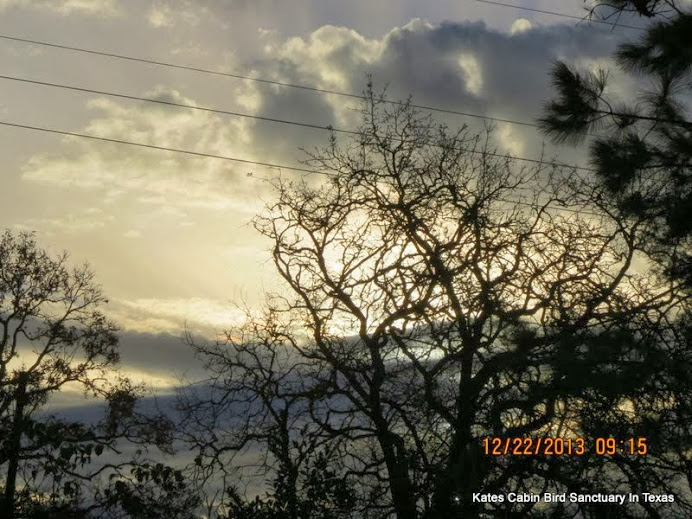
If the cloud cover gets a break, it repairs itself!


https://en.wikipedia.org/wiki/Insolation


Insolation

From Wikipedia, the free encyclopedia
Insolation (short for incident or incoming solar radiation) is a measure ofsolar radiation energy received on a given surface area and recorded during a given time. It is also called solar irradiation and expressed as "hourly irradiation" if recorded during an hour or "daily irradiation" if recorded during a day. The unit recommended by the World Meteorological Organization is megajoules per square metre (MJ/m2) or joules per square millimetre (J/mm2).[1] An alternate unit of measure is the Langley (1 thermochemical calorie per square centimeter or 41,840 J/m2). Practitioners in the business of solar energy may use the unit watt-hours per square metre (Wh/m2). If this energy is divided by the recording time in hours, it is then a density of power called irradiance, expressed in watts per square metre (W/m2).

Annual mean insolation at the top of Earth's atmosphere(top) and at the planet's surface

Absorption and reflection[edit]

The object or surface that solar radiation strikes may be a planet, a terrestrial object inside the atmosphere of a planet, or an object exposed to solar rays outside of an atmosphere, such as spacecraft. Some of the radiation will be absorbed and the remainder reflected. Usually the absorbed solar radiation is converted to thermal energy, causing an increase in the object's temperature. Manmade or natural systems, however, may convert a portion of the absorbed radiation into another form, as in the case of photovoltaic cells or plants. The proportion of radiation reflected or absorbed depends on the object's reflectivity or albedo.

Projection effect[edit]

The insolation into a surface is largest when the surface directly faces the Sun. As the angle increases between the direction at a right angle to the surface and the direction of the rays of sunlight, the insolation is reduced in proportion to the cosine of the angle; see effect of sun angle on climate.


US annual average solar energy received by a latitude tilt photovoltaic cell(modeled)

Average insolation in Europe; also seeInsolation map of Europe and Africa for freer-licence map.
Direct insolation is the solar irradiance measured at a given location on Earth with a surface element perpendicular to the Sun's rays, excluding diffuse insolation (the solar radiation that is scattered or reflected by atmospheric components in the sky). Direct insolation is equal to the solar constant minus the atmospheric losses due to absorptionand scattering. While the solar constant varies with the Earth-Sun distance and solar cycles, the losses depend on the time of day (length of light's path through the atmosphere depending on the Solar elevation angle), cloud cover, moisture content, and otherimpurities. Insolation is a fundamental abiotic factor[2] affecting the metabolism of plants and the behavior of animals.

The theory for the distribution of solar radiation at the top of the atmosphere concerns how the solar irradiance (the power of solar radiation per unit area) at the top of the atmosphere is determined by the sphericity and orbital parameters of Earth. The theory could be applied to any monodirectional beam of radiation incident onto a rotating sphere, but is most usually applied to sunlight, and in particular for application in numerical weather prediction, and theory for the seasons and the ice ages. The last application is known asMilankovitch cycles.

(Please see above link for complete page in Wikipedia)


Photo

The Sun refuses to be behind a solar cloud cover as it breaks on through to Shine!


...this is brendasue signing off from Rainbow Creek.  See You next time!

O+O