
ROAD TRIP
Hi Everybody!!! Road Trip Tonight!!!
We are heading out to our local Garden Store in search of Flowering Plants that love the Heat and the Texas Sun. Who Blooms the best in Summer??? Your Photostudy is of these heat loving plants which are also drought tolerant!
I am going to be gone for a week (in real time) so You have a Big Surprise Fantasy Trip Tonight for the Fourth of July Holiday!!! See You back on the 5th.
Enjoy!!!!!!!!!!!!!!
Just Push Play to go to Bluebonnet Herb Farm in Hempstead, Texas!!!!!


Bluebonnet Herb Farms
2015 13th Street, Hempstead, TX 77445, Phone: 979-826-4290
Herbs and more… 
Whether you are looking for garden plants and accessories, that one of a kind, Bluebonnet Herb Farms offers one stop shopping with a touch of whimsy and a whole lot of ease.

Whether you are looking for garden plants and accessories, that one of a kind, Bluebonnet Herb Farms offers one stop shopping with a touch of whimsy and a whole lot of ease.
Bluebonnet Herb Farms offers a large selection of plants, herbs, and lawn decor.After a stroll around the garden, visitors can enjoy shopping for antiques, collectibles, and gifts that are available inside the gift shop.
Linda Wood leads a landscaping team who can transform any lawn into a relaxing haven. Whether it is a winding flagstone path, an arbor for your favorite rose, or a soothing water feature to relax you after a hard day, your yard will become your favorite sanctuary.

Bluebonnet Herb Farm & Landscaping
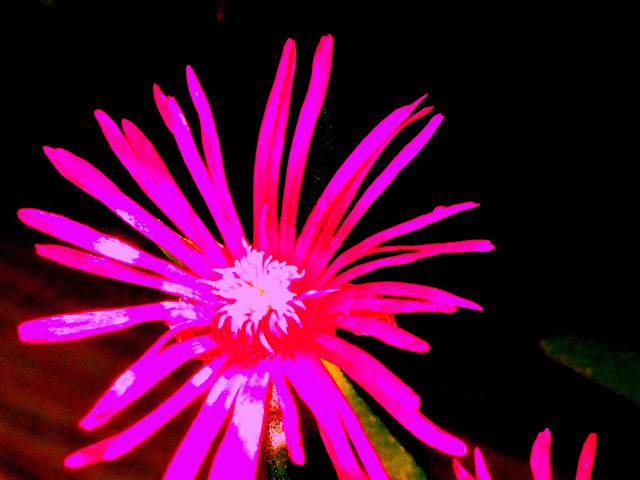


Lagerstroemia
From Wikipedia, the free encyclopedia
 /ˌleɪɡərˈstriːmiə/),[1] commonly known as Crape myrtle or Crepe myrtle, is a genus of around 50 species of deciduous and evergreen trees and shrubs native to theIndian subcontinent, southeast Asia, northern Australia and parts of Oceania, cultivated in warmer climates around the world. It is a member of the Lythraceae, which is also known as the Loosestrife family. The genus is named after the Swedish merchant Magnus von Lagerström, who supplied Carolus Linnaeus with plants he collected.
| Crape myrtle | |
|---|---|
 | |
| Lagerstroemia indica | |
| Scientific classification | |
| Kingdom: | Plantae |
| Division: | Magnoliophyta |
| Class: | Magnoliopsida |
| Order: | Myrtales |
| Family: | Lythraceae |
| Genus: | Lagerstroemia Linnaeus |

The Common Crape myrtle (Lagerstroemia indica) from China and Korea, was introduced circa 1790 to Charleston, South Carolina, in the United States by the French botanist André Michaux. In the wild the species is most often found as a multi-stemmed large shrub, but two hundred years of cultivation has resulted in a huge number of cultivarsof widely varying characteristics. Today it is possible to find crape myrtles to fill every landscape need, from tidy street trees to dense barrier hedges all the way down to fast-growing dwarf types of less than two feet which can go from seed to bloom in a season (allowing gardeners in places where the plant is not winter hardy to still enjoy the intense colors of the frilly flowers). In Europe crape myrtle is common in the south of France, the Iberian Peninsula and all of Italy; in the United States it can be seen anywhere south of USDA Zone 6, doing best and avoiding fungal diseases in mild climates that are not overly humid such as inland California and Texas.
While not as widely known, the Japanese Crape myrtle (Lagerstroemia fauriei) from central and southern Japan is becoming increasingly important, both as a landscaping plant and as a parent in complex hybrids with L. indica. This species is distinctly tree-like with colorful deciduous bark and dark green leaves which are more resistant to fungal diseases than are those of its more popular relative. The Japanese name for this tree is saru suberi (literally "monkey slip") which refers to the smooth, slippery bark. Flowers are as large as those of L. indica, but are white with only the slightest pink flush appearing in some individuals. Japanese Crape myrtle is hardier to cold than many strains of L. indica, a characteristic (along with fungal-resistance, tree form and colorful bark) that makes it valuable as genetic material for hybridization. Cultivars available include "Kiowa", "Fantasy" and "Townhouse."[4]
Lagerstroemia speciosa, known as Queen Crape myrtle, Giant Crape myrtle or Banabá originates in subtropical and tropical India. It can be grown in any similar climate, but in the United States is suitable only for southern Florida, southernmost Texas, southern California and Hawaii. It is a large evergreen tree with colorful rosy-mauve flowers and striking white bark, suitable for public parks and avenues; only the seed-grown species is commonly available for sale, unlike L. indica and L. fauriei, which have dozens of cultivars.
Description
While various species and cultivars are able to fill a wide variety of landscape needs, crepe myrtles are chiefly known for their colorful and long-lasting flowers. Most species ofLagerstroemia have sinewy, fluted stems and branches with a mottled appearance that arises from having bark that sheds throughout the year. The leaves are opposite, simple, with entire margins, and vary from 5–20 cm (2–8 in). While all species are woody in nature, they can range in height from over 100 feet to under one foot; most, however are small to medium multiple-trunked trees and shrubs. The leaves of temperate species provide autumn color.
Flowers are born in summer and autumn in panicles of crinkled flowers with a crepe-like texture. Colors vary from deep purple to red to white, with almost every shade in between. Although no blue-flowered varieties exist, it is toward the blue end of the spectrum that the flowers trend, with no sight of orange or yellow except in stamens and pistils. The fruit is a capsule, green and succulent at first, then ripening to dark brown or black dryness. It splits along six or seven lines, producing teeth much like those of the calyx, and releases numerous small winged seeds.
In their respective climates, both sub-tropical and tropical species are common in domestic and commercial landscapes. The timber of some species has been used to manufacture bridges, furniture and railway sleepers.[2] Lagerstroemia species are used as food plants by the larvae of some Lepidoptera species including Endoclita malabaricus.
The leaves of Lagerstoemia parviflora are fed on by the Antheraea paphia moth which produces the tassar silk (Tussah), a form of wild silk of commercial importance in India.
Just Push Play


The Next Heat Loving Flowers are Bougainvillea:
http://en.wikipedia.org/wiki/Bougainvillea
Bougainvillea
From Wikipedia, the free encyclopedia
| Bougainvillea | |
|---|---|
 | |
| Bougainvillea spectabilis | |
| Scientific classification | |
| Kingdom: | Plantae |
| (unranked): | Angiosperms |
| (unranked): | Eudicots |
| (unranked): | Core eudicots |
| Order: | Caryophyllales |
| Family: | Nyctaginaceae |
| Tribe: | Bougainvilleeae |
| Genus: | Bougainvillea Comm. ex Juss.[1] |
Bougainvillea ( /ˌbuːɡɨnˈvɪliə/)[2] is a genus of flowering plants native to South Americafrom Brazil west to Peru and south to southern Argentina (Chubut Province). Different authors accept between four and 18 species in the genus. The first European to describe these plants was Philibert Commerçon, a French botanist accompanying French Navy admiral and explorerLouis Antoine de Bougainville during his voyage of circumnavigation, and first published for him by Antoine Laurent de Jussieu in 1789.[3] It is possible that the first European to observe these plants was Jeanne Baré, Commerçon's lover and assistant whom he snuck on board (despite regulations) disguised as a man (and who thus became the first woman to circumnavigate the globe).[4]
/ˌbuːɡɨnˈvɪliə/)[2] is a genus of flowering plants native to South Americafrom Brazil west to Peru and south to southern Argentina (Chubut Province). Different authors accept between four and 18 species in the genus. The first European to describe these plants was Philibert Commerçon, a French botanist accompanying French Navy admiral and explorerLouis Antoine de Bougainville during his voyage of circumnavigation, and first published for him by Antoine Laurent de Jussieu in 1789.[3] It is possible that the first European to observe these plants was Jeanne Baré, Commerçon's lover and assistant whom he snuck on board (despite regulations) disguised as a man (and who thus became the first woman to circumnavigate the globe).[4]
They are thorny, woody vines growing anywhere from 1 to 12 meters tall, scrambling over other plants with their spiky thorns. The thorns are tipped with a black, waxy substance. They are evergreen where rainfall occurs all year, or deciduous if there is a dry season. The leavesare alternate, simple ovate-acuminate, 4-13 cm long and 2-6 cm broad. The actual flower of the plant is small and generally white, but each cluster of three flowers is surrounded by three or six bracts with the bright colours associated with the plant, including pink, magenta, purple, red, orange, white, or yellow. Bougainvillea glabra is sometimes referred to as "paper flower" because the bracts are thin and papery. The fruit is a narrow five-lobed achene.
Bougainvillea are relatively pest-free plants, but may suffer from worms, snails and aphids. The larvae of some Lepidoptera species also use them as food plants, for example the Giant Leopard Moth (Hypercompe scribonia)
Cultivation and uses

Bougainvilleas are popular ornamental plants in most areas with warm climates, includingEthiopia, Indonesia, Aruba, the Philippines, Thailand, Pakistan, India, Sri Lanka, Yunnan, China, Taiwan, Vietnam, Malaysia, Australia, Greece, Spain, Turkey, Cyprus, Singapore, theMediterranean region, the Caribbean, Central America, Mexico, South Africa, Kuwait, Qatar, the United Arab Emirates and the southern mainland United States and Hawaii. Locarno in Switzerland, with its mild Mediterranean climate, is famous for its bougainvilleas.
Although it is frost-sensitive and hardy in U.S. Hardiness Zones 9b and 10, bougainvillea can be used as a houseplant or hanging basket in cooler climates. In the landscape, it makes an excellent hot season plant, and its drought tolerance makes bougainvillea ideal for warm climates year-round. Bougainvillea has a high salt tolerance, which makes it a natural choice for color on coastal regions. As a woody clambering vine, bougainvillea will stand alone and can be pruned into a standard, but it is perfect along fence lines, on walls, in containers and hanging baskets, and as a hedge or an accent plant. Its long arching branches are thorny, and bear heart-shaped leaves and masses of papery bracts in white, pink, orange, purple, and burgundy. Many cultivars, including double flowered and variegated, are available.
Twenty years after Commerçon's discovery, it was first published as 'Buginvillea' in Genera Plantarum by A.L. de Jusseau in 1789. The genus was subsequently split in several ways until it was finally corrected to 'Bougainvillea' in the Index Kewensis in the 1930s. Originally, B. spectabilis and B. glabra were hardly differentiated until the mid 1980s when botanists recognized them to be totally distinct species. In early 19th century, these two species were the first to be introduced into Europe, and soon, nurseries in France andEngland did a thriving trade providing specimens to Australia and other faraway countries. Meanwhile, Kew Gardens distributed plants it had propagated to British colonies throughout the world. Soon thereafter, an important event in the history of bougainvillea took place with the discovery of a crimson bougainvillea in Cartagena, a Spanish port in the Mediterranean, by Mrs. R.V. Butt. Originally thought to be a distinct species, it was named B. buttiana in her honour. However, it was later discovered to be a natural hybrid of a variety of B. glabra and possibly B. peruviana - a "local pink bougainvillea" from Peru. Natural hybrids were soon found to be common occurrences all over the world. For instance, around the 1930s, when the three species were grown together, many hybrid crosses were created almost spontaneously in East Africa, India, the Canary Islands, Australia, North America, and the Philippines.
Many of today's bougainvillea are the result of interbreeding among only three out of the eighteen South American species recognized by botanists. Currently, there are over 300 varieties of bougainvillea around the world. Because many of the hybrids have been crossed over several generations, it's difficult to identify their respective origins. Natural mutations seem to occur spontaneously throughout the world; wherever large numbers of plants are being produced, bud-sports will occur. This had led to multiple names for the same cultivar (or variety) and has added to the confusion over the names of bougainvillea cultivars.
The growth rate of Bougainvillea vary from slow-growing to rapid, depending on the particular variety. Bougainvillea tend to flower all year round in equatorial regions. Elsewhere, they are seasonal bloomers. They grow best in somewhat dry, fertile soil. Bloom cycles are typically four to six weeks. Bougainvillea grow best in very bright full sun and with frequent fertilization, but the plant requires little water once established. As indoor houseplants in temperate regions, they can be kept small by bonsai techniques. If overwatered,Bougainvillea will not flower and may lose leaves or wilt, or even die from root decay. Bougainvillea can be easily propagated via tip cuttings
Gallery


Just Push Play


NOW FOR YOUR SURPRISE!!!!!!!!!!!!
********************************
Feature Presentation:
Fantasy Vacation for 4th of July
FOR YOU!!!!! ENJOY!!!!!
Just Push Play
Just Push Play
Just Push Play
Just Push Play
....this is brendasue signing off from Rainbow Creek
See You Next Time!!
***NOTE:
I am heading out for a Holiday Vacation. There will be No Post until July 5, 2012.
I feel confident you will find plenty to read in back posts until I get back!!!!
(This blog launched January 1, 2012)
To my friends in the States:
Have a Happy & Safe 4th
To my friends Abroad:
I hope You All will live in FREEDOM.
To my friends in Space (ISS):
Have a Great Trip & Take Photos for Us!!!!!
Of Course, one more Great 4th of July Performance----Just Push Play
Spectacular Fireworks Display!!!!!!!!!!!!

Just Push Play
O+O
