Hi Everybody!!

Hi Everybody!!
Welcome to my Hometown!!
Showing posts with label brugmansia. Show all posts

Sunday, December 8, 2013

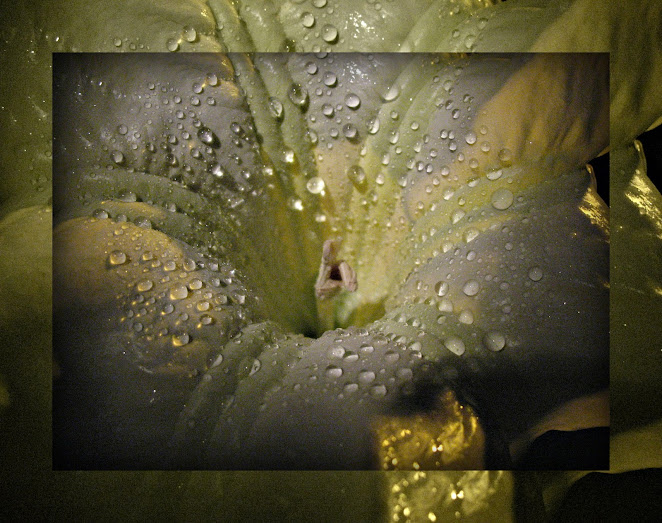
THE ANGELS OF DECEMBER (A BRUGMANSIA PHOTO BLOG)


Hi Everybody!!
I am excited to share with You my 'Angels of December'.  These flowers bloom all year, but the December Blooms are special in my yard. The colder weather really makes the big white flowers POP! Below, I have shared an info excerpt from Wikipedia on Brugmansia, The Angel's Trumpet. (Check the Google Search for where to buy these flowers).  Also below, links to photostudies in my G+Gallery to see more Angels! Enjoy!


http://en.wikipedia.org/wiki/Brugmansia

Brugmansia

From Wikipedia, the free encyclopedia

Brugmansia is a genus of seven species of flowering plants in the family Solanaceae. Their large, fragrant flowers give them their common name of angel's trumpets, a name sometimes used for the closely related genus DaturaBrugmansia are woody trees or shrubs, with pendulous, not erect, flowers, that have no spines on their fruit. Daturaspecies are herbaceous bushes with erect (not pendulous) flowers, and most have spines on their fruit.
Brugmansia
Brugmansia 'Feingold'
Brugmansia 'Feingold'
Scientific classification
Kingdom:Plantae
(unranked):Angiosperms
(unranked):Eudicots
(unranked):Asterids
Order:Solanales
Family:Solanaceae
Subfamily:Solanoideae
Tribe:Datureae
Genus:Brugmansia
Pers.

Description[edit]

Brugmansia are large shrubs or small trees, with semi-woody, often many-branched trunks. They can reach heights of 3–11 m (10–36 ft). The leaves are alternately arrangedalong the stems, generally large, 10–30 cm (4–12 in) long and 4–18 cm (2–7 in) across, with an entire or coarsely toothed margin, and are often covered with fine hairs. The name "angel's trumpet" refers to the large, pendulous, trumpet-shaped flowers, 14–50 cm (6–20 in) long and 10–35 cm (4–14 in) across at the opening. They come in shades of white, yellow, pink, orange, green, or red. Most have a strong, pleasing fragrance that is most noticeable in the evening. Flowers may be single, double, or more.

Distribution and habitat[edit]

Brugmansia are native to tropical regions of South America, along the Andes from Venezuela to northern Chile, and also in south-eastern Brazil.[2] They are grown as ornamental container plants world-wide, and have become naturalized in isolated tropical areas around the globe, including within North America, Africa, Australia, and Asia.[3][4][5][6]

Ecology[edit]

Most Brugmansia are fragrant in the evenings to attract pollinating moths.[7] One species lacking scent, the red-flowered Brugmansia sanguinea, is pollinated by long-billed hummingbirds.[2] Brugmansia have two main stages to their life cycle. In the initial vegetative stage the young seedling grows straight up on usually a single stalk, until it reaches its first main fork at 80–150 cm (2.6–4.9 ft) high. It will not flower until after it has reached this fork, and then only on new growth above the fork. Cuttings taken from the lower vegetative region must also grow to a similar height before flowering, but cuttings from the upper flowering region will often flower at a very low height.[2]
One interesting example of plant/animal interaction involves the butterfly Placidula euryanassa, which uses Brugmansia suaveolensas one of its main larval foods. It has been shown that these can sequester the plant's tropane alkaloids and store them through thepupal stage on to the adult butterfly, where they are then used as a defense mechanism, making themselves less palatable tovertebrate predators.[8]
See above link for complete article


Link to photostudy in G+ Photo Album:
https://plus.google.com/u/0/photos/117645114459863049265/albums/5954907490337756945


...this is brendasue signing off from Rainbow Creek.  See You next time! Plant some Angels where You are!


Link to old angels album:
https://plus.google.com/u/0/photos/117645114459863049265/albums/5701243862025027793


O+O

Sunday, November 10, 2013

ANOLES AND ANGELS FOR YOU! (GOODBYE PRINCE ANOLE PHOTO BLOG)


Hi Everybody!!
It seems like just yesterday Prince Anole~ was emerging from his deep winter sleep. Here it is time for him to return to hibernation for the cold winter.  As we all go inside from the icy chill, we take with us our fond memories of Spring and Summer to relive in retrospect over a cup of hot cocoa by the warm fire. I encourage You to open a Google Photo Album and upload your sunny pics to remember and to share. Lonely Days are gone! You just need your Gmail account. I invite you to browse through my Albums and enjoy the Great Outdoors from inside. We say goodbye to Prince Anole as he heads to his winter home underground. He will go down in these History Records as the only Anole of Royal Bloodlines. My Picasa Editing Program has discontinued the "Crown Option" as well as the "Santa Hats" I usually put on the buzzards at Christmas. (I was probably the only nut who used these options)! So, Goodbye Prince Anole, the little green Ambassador of Peace. Below you will find links to the photostudies and info on Anoles and Angel Trumpets. Enjoy!


https://en.wikipedia.org/wiki/Carolina_anole

Carolina anole

From Wikipedia, the free encyclopedia
The Carolina anole (Anolis carolinensis) is an arboreal lizard found primarily in thesoutheastern United States and some Caribbean islands. Other common names include the green anoleAmerican anole and red-throated anole. It is also sometimes referred to as the American chameleon due to its ability to change color from several brown hues to bright green. While many kinds of lizards are capable of changing color, anoles are closely related to iguanas[2] and are not true chameleons. The Carolina is a small lizard; male adults are usually 15 cm (5.9 in) long in adulthood, about half of which is its tail, and it can weigh from 3–7 g (0.11–0.25 oz). Exceptionally, these anoles will grow up to 20 cm (7.9 in) in length.[3][4][5] Anolis carolinensis is part of the carolinensisseries of anoles.
Carolina anole
Conservation status
Scientific classification
Kingdom:Animalia
Phylum:Chordata
Class:Reptilia
Order:Squamata
Family:Polychrotidae
Genus:Anolis
Species:A. carolinensis

Distribution[edit]

This species is native to North America, where it is found mainly in the southeastern parts of the continent. Anoles are most abundant on the Atlantic Coastal Plains in North CarolinaSouth CarolinaFlorida, and Georgia, and the Gulf Coast in Alabama,MississippiLouisiana, and Texas and have been found as far north as southernTennessee and southeastern Virginia. The species has been introduced into Hawaii and the Ogasawara Islands. In 2012, there were sightings of the green anole in the San Diegoregion of southern California.[6]

Behavior[edit]


Anole licking

Green anole eating a moth
Anoles are territorial creatures. Some have even been witnessed fighting their own reflections in mirrored glass. Stress in an anole can be identified by several symptoms, to include chronic lethargy and persistent black semicircles behind its eyes. Like many lizards, anoles display autotomic tails, which when broken off continue to move. This hopefully distracts the predator and helps the anole to escape.
Anoles also display curiosity. A healthy lizard usually has a good awareness of its surroundings. The male is very territorial and will fight other males to defend its territory.[7]The other male is frequently an introduced and invasive brown anole (Anolis sagrei). When browns first immigrated to the United States in the early 1970s,[8] the Carolinas ceded their ground-level territories and were relegated to a very different ecosystem high in the treetops. On occasion a more aggressive Carolina may be seen closer to the ground and in competition with the browns.

Male anole with extended dewlap, used to court females and to exert dominance over territory


The Angel's Trumpet:


https://en.wikipedia.org/wiki/Brugmansia


Brugmansia

From Wikipedia, the free encyclopedia
Brugmansia
Brugmansia 'Feingold'
Brugmansia 'Feingold'
Scientific classification
Kingdom:Plantae
(unranked):Angiosperms
(unranked):Eudicots
(unranked):Asterids
Order:Solanales
Family:Solanaceae
Subfamily:Solanoideae
Tribe:Datureae
Genus:Brugmansia
Pers.
Brugmansia is a genus of seven species of flowering plants in the family Solanaceae. Their large, fragrant flowers give them their common name of angel's trumpets, a name sometimes used for the closely related genus DaturaBrugmansia are woody trees or shrubs, with pendulous, not erect, flowers, that have no spines on their fruit. Daturaspecies are herbaceous bushes with erect (not pendulous) flowers, and most have spines on their fruit.[2]

Description[edit]

Brugmansia are large shrubs or small trees, with semi-woody, often many-branched trunks. They can reach heights of 3–11 m (10–36 ft). The leaves are alternately arrangedalong the stems, generally large, 10–30 cm (4–12 in) long and 4–18 cm (2–7 in) across, with an entire or coarsely toothed margin, and are often covered with fine hairs. The name "angel's trumpet" refers to the large, pendulous, trumpet-shaped flowers, 14–50 cm (6–20 in) long and 10–35 cm (4–14 in) across at the opening. They come in shades of white, yellow, pink, orange, green, or red. Most have a strong, pleasing fragrance that is most noticeable in the evening. Flowers may be single, double, or more.

Distribution and habitat[edit]

Brugmansia are native to tropical regions of South America, along the Andes from Venezuela to northern Chile, and also in south-eastern Brazil.[2] They are grown as ornamental container plants world-wide, and have become naturalized in isolated tropical areas around the globe, including within North America, Africa, Australia, and Asia.[3][4][5][6]

Ecology[edit]

Most Brugmansia are fragrant in the evenings to attract pollinating moths.[7] One species lacking scent, the red-flowered Brugmansia sanguinea, is pollinated by long-billed hummingbirds.[2] Brugmansia have two main stages to their life cycle. In the initial vegetative stage the young seedling grows straight up on usually a single stalk, until it reaches its first main fork at 80–150 cm (2.6–4.9 ft) high. It will not flower until after it has reached this fork, and then only on new growth above the fork. Cuttings taken from the lower vegetative region must also grow to a similar height before flowering, but cuttings from the upper flowering region will often flower at a very low height.[2]
One interesting example of plant/animal interaction involves the butterfly Placidula euryanassa, which uses Brugmansia suaveolensas one of its main larval foods. It has been shown that these can sequester the plant's tropane alkaloids and store them through thepupal stage on to the adult butterfly, where they are then used as a defense mechanism, making themselves less palatable tovertebrate predators.[8]


Your photostudy is at my G+ Gallery. Click on Link!
link:
https://plus.google.com/photos/117645114459863049265/albums/5939306807886498641


...this is brendasue signing off from Rainbow Creek.  See You next time!

**Bonus photostudies if You are stuck inside today:

link:
https://plus.google.com/u/0/photos/117645114459863049265/albums/5942191872390411969


https://plus.google.com/u/0/photos/117645114459863049265/albums/5942865525099120465


https://plus.google.com/u/0/photos/117645114459863049265/albums/5942863183323918129


https://plus.google.com/u/0/photos/117645114459863049265/albums/5942575037234494129
Photo


(Big Album March 2013)
https://plus.google.com/u/0/photos/117645114459863049265/albums/5853560983904625121


The Last Baaaaaaaooouuuuuuuuuu for the Red Queen: Kay Lonnie Wray. Left Earth on June 8, 2013

O+O

Tuesday, January 24, 2012

The Deadly Angels of Rainbow Creek (Nature Photo Blog)


Hi Everybody!


Nature Break for a minute or so! As January 2012 is the first official month of the new blog, we are still getting to know each other.  More are coming everyday (Hello). Let me just recap my goals here:

1. To connect with other Nature Lovers, Artists, Gardeners, Musicians and Creative People around the World to share friendship, experiences, photos, videos, etc., and to build a foundation.for discussions of problem and solution ideas for our Planet and Humanity.
2. To create alternative digital content on Social Networks which is educational for my Grandchildren and all Grandchildren.
3. To share my Outdoor Life with people who are in Hospitals, Retirement Homes, Prisons or Homebound, with  my adventures at Kates Cabin Bird Sanctuary of the birds and other living things here.
4. To provide a platform for discussions that is free from the barriers of language, borders, religions.
5. To  establish  creative ways to get computers (and lessons) to all senior citizens for support groups of the challenges being elderly in the 2000's
6.  To spread more JOY to the World and positive energy.
7. To be a good friend to YOU!!!!

Now let's get to your photostudy for tonight.  I am sharing one of my favorite flowers:  The Angels Trumpet!
I want to encourage everybody to have a small garden or at least a plant in a pot. (not silk or plastic). Please remember to find out which plants are toxic to humans.  These angels are beautiful, but very toxic.

At the end of the photostudy is some information about this plant and  a link  to the remaining text.  Enjoy!


Here is a link and partial text from site:

http://en.wikipedia.org/wiki/Brugmansia


Brugmansia

From Wikipedia, the free encyclopedia:
Brugmansia is a genus of seven species of flowering plants in the family Solanaceae with large, fragrant flowers. They are known as Angel's Trumpets, sometimes sharing that name with the closely related genus Datura. Brugmansia are woody trees or bushes, with pendulous, not erect, flowers, that have no spines on their fruit. Datura species are herbaceous bushes with erect (not pendulous) flowers, and most have spines on their fruit.

Description

Brugmansia are large shrubs or small trees, with semi-woody, often many-branched trunks. They can reach heights of up to 3–11 m (10–36 ft).
The leaves are alternate, generally large, 10–30 cm (4–12 in) long and 4–18 cm (2–7 in) across, with an entire or coarsely toothed margin, and are often covered with fine hairs.
The name Angel's Trumpet refers to the large, pendulous, trumpet-shaped flowers, 14–50 cm (6–20 in) long and 10–35 cm (4–14 in) across at the opening. They come in shades of white, yellow, pink, orange, green, or red. Most have a strong, pleasing fragrance that is most noticeable in the evening. Flowers may be single, double, or more.


Distribution and habitat

Brugmansia are native to tropical regions of South America, along the Andes Mountains from Venezuela to northern Chile, and also in south-eastern Brazil. They are grown as ornamental container plants world-wide, and have become naturalized in isolated tropical areas around the globe, including within North America, Africa, Australia, and Asia

Ecology

Most Brugmansia are fragrant in the evenings to attract pollinating moths.One species lacking scent, the red-flowered Brugmansia sanguinea, is pollinated by long-billed hummingbirds. Brugmansia have two main stages to their life cycle. In the initial vegetative stage the young seedling grows straight up on usually a single stalk, until it reaches its first main fork at 80–150 cm (2.6–4.9 ft) high. It will not flower until after it has reached this fork, and then only on new growth above the fork. Cuttings taken from the lower vegetative region must also grow to a similar height before flowering, but cuttings from the upper flowering region will often flower at a very low height.
One interesting example of plant/animal interaction involves the butterfly Placidula euryanassa, which uses Brugmansia suaveolens as one of its main larval foods. It has been shown that these can sequester the plant's tropane alkaloids and store them through the pupal stage on to the adult butterfly, where they are then used as a defense mechanism, making themselves less palatable to vertebrate predators.
Uses
Brugmansia are most often grown today as flowering ornamental plants.
In modern medicine, important alkaloids such as scopolominehyoscyamine, and atropine, found inBrugmansia and other related members of Solanaceae, have proven medical value for their spasmolytic,anti-asthmaticanticholinergicnarcotic and anesthetic properties, although many of these alkaloids, or their equivalents, are now artificially synthesized.
Brugmansia have also traditionally been used in many South American indigenous cultures in medical preparations and as a ritualistic hallucinogen for divination, to communicate with ancestors, as a poison in sorcery and black magic, and for prophecy. Medicinally, they have mostly been used externally as part of a poulticetincture, ointment, or where the leaves are directly applied transdermally to the skin. External uses include the treating of aches and pains, dermititisorchitisarthritisrheumatism, headaches, infections, and as an anti-inflammatory. They have been used internally much more rarely due to the inherent danger of ingestion. Internal uses, in highly diluted preparations , and often as a portion of a larger mix, include treatments for stomach & muscle ailments, as a decongestant, to induce vomiting, to expel worms and parasites, and as a sedative. In a concentrated or refined form, derivatives of Brugmansia are also used for murder, seduction, and robbery.
Several South American cultures have used Brugmansia as a treatment for unruly children, that they might be admonished directly by their ancestors in the spirit world, and thereby become more compliant. Mixed with maize beer and tobacco leaves, it has been used to drug wives and slaves before they were buried alive with their dead lord.

Toxicity

All parts of Brugmansia are poisonous, with the seeds and leaves being especially dangerous. Brugmansia are rich in Scopolomine(hyoscine), hyoscyamine, and several other tropane alkaloids. Effects of ingestion can include paralysis of smooth muscles, confusion,tachycardia, dry mouth, diarrhea, migraine headaches, visual and auditory hallucinations, mydriasis, rapid onset cycloplegia, and death.
The hallucinogenic effects of Brugmansia were described in the journal Pathology as "terrifying rather than pleasurable". The author Christina Pratt, in An Encyclopedia of Shamanism, says that "Brugmansia induces a powerful trance with violent and unpleasant effects, sickening aftereffects, and at times temporary insanity". These hallucinations are often characterized by complete loss of awareness that one is hallucinating, disconnection from reality, and amnesia of the episode, such as one example reported in Psychiatry and Clinical Neuroscience of a young man who amputated his own penis and tongue after drinking only 1 cup of Brugmansia tea.  The Swiss naturalist and explorer Johann von Tschudi described the effects of Brugmansia ingestion on one individual in Peru:
Soon after drinking the Tonga, the man fell into a dull brooding, he stared vacantly at the ground, his mouth was closed firmly, almost convulsively and his nostrils were flared. Cold sweat covered his forehead. He was deathly pale. The jugular veins on his throat were swollen as large as a finger and he was wheezing as his chest rose and sank slowly. His arms hung down stiffly by his body. Then his eyes misted over and filled with huge tears and his lips twitched convulsively for a brief moment. His carotids were visibly beating, his respiration increased and his extremities twitched and shuddered of their own accord. This condition would have lasted about a quarter of an hour, then all these actions increased in intensity. His eyes were now dry but had become bright red and rolled about wildly in their sockets and all his facial muscles were horribly distorted. A thick white foam leaked out between his half open lips. The pulses on his forehead and throat were beating too fast to be counted. His breathing was short, extraordinarily fast and did not seem to lift the chest, which was visibly fibrillating. A mass of sticky sweat covered his whole body which continued to be shaken by the most dreadful convulsions. His limbs were hideously contorted. He alternated between murmuring quietly and incomprehensibly and uttering loud, heart-rending shrieks, howling dully and moaning and groaning.
Some municipalities prohibit the purchase, sale, or cultivation of Brugmansia plants.
In 1994, 112 teenagers were admitted to hospitals from ingesting Brugmansia in Florida alone. The concentrations of alkaloids in all parts of the plant differ markedly. They even vary with the seasons and the level of hydration, so it is nearly impossible to determine a safe level of alkaloid exposure.
(View the remaining content  at link above).


.....this is brendasue signing off from Rainbow Creek!


O+O